Quick Answer: Deep water culture suspends roots in constantly oxygenated nutrient solution for rapid growth, while ebb and flow periodically floods and drains a growing medium for a more forgiving wet/dry cycle. DWC wins on raw speed for leafy greens and cannabis; ebb and flow wins on versatility and forgiveness for larger fruiting plants. Neither is universally better — your ideal system depends on your crops, budget, and how hands-on you want to be.
Choosing between deep water culture vs ebb and flow is one of the first real decisions a hydroponic grower faces, and it’s worth getting right. Both systems are proven, scalable, and capable of impressive yields — but they work in fundamentally different ways. Those differences matter a lot depending on what you’re growing and how much time you can spend managing your setup.
Deep Water Culture vs Ebb and Flow: How Each System Works
What Is Deep Water Culture?
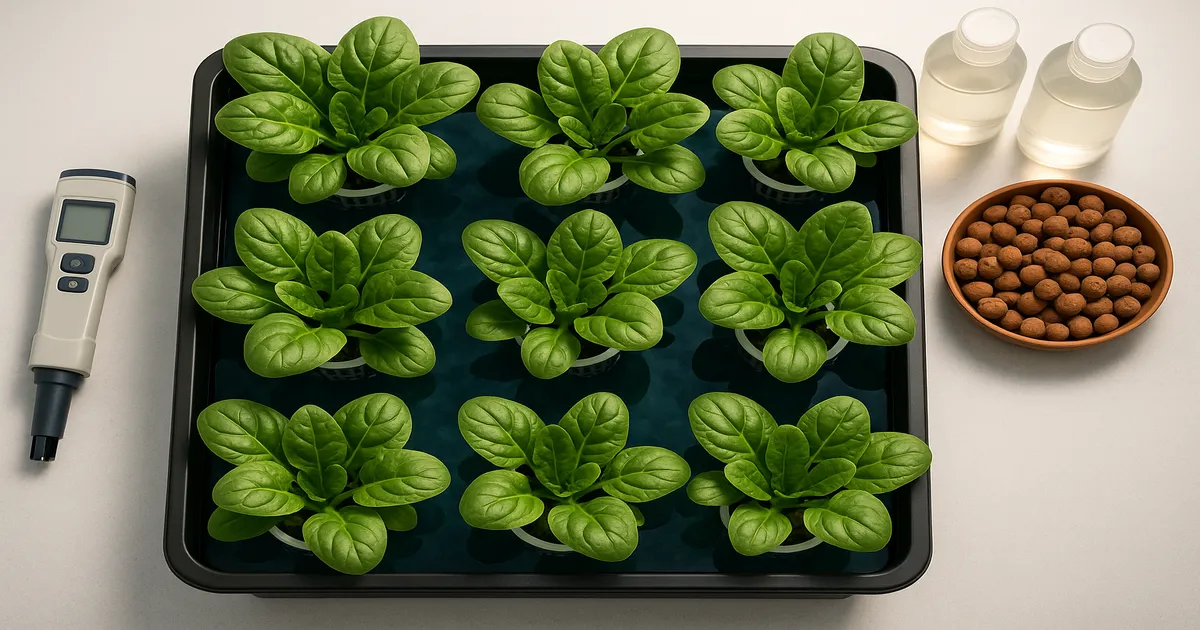
Deep water culture (DWC) suspends plant roots directly in a reservoir of oxygenated nutrient solution. An air pump and air stones keep dissolved oxygen high — without adequate oxygen, roots suffocate within hours. The “deep” part matters: you need at least 8–10 inches of solution depth to buffer against temperature and pH swings.
What Is Ebb and Flow (Flood and Drain)?
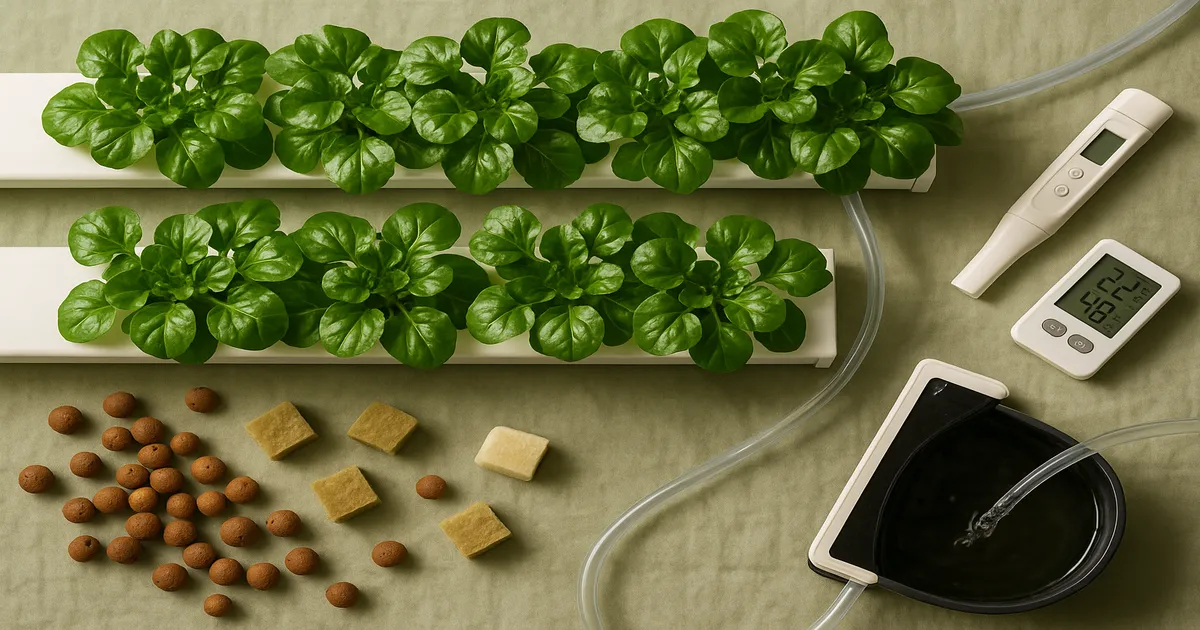
Ebb and flow systems grow plants in an inert medium — clay pebbles, rockwool, perlite, or coco coir — inside a flood tray. A submersible pump floods the tray on a timer 2–6 times per day, then gravity drains the solution back to the reservoir below. Roots absorb nutrients during the flood and take in oxygen during the drain. That wet/dry rhythm is the whole point of the system.
Side-by-Side Comparison
| Factor | Deep Water Culture | Ebb and Flow |
|---|---|---|
| Startup Cost | Low (~$50 for single bucket) | Moderate ($100–$300 for basic table) |
| Complexity | Low–Medium | Medium |
| Best Crops | Lettuce, herbs, cannabis | Tomatoes, peppers, cucumbers, clones |
| Maintenance Level | High (daily reservoir checks) | Medium (every 1–2 days) |
| Oxygen Delivery | Dissolved O₂ via air stones | Air exchange during drain phase |
| Scalability | Good (RDWC for large grows) | Excellent (flood tables scale easily) |
| Beginner Friendliness | Moderate | High |
Setup, Components, and Variants
Building a DWC System
A basic DWC setup needs just a handful of parts: a food-grade reservoir (a 5-gallon bucket works for one plant), net pots that sit in a lid cutout, an air pump, air tubing, and an air stone. Fill the reservoir so the bottom of the net pots just touches the solution at first. As roots grow down, lower the level slightly to maintain an air gap at the top — that gap is where roots access oxygen directly.
Key components:
- Net pots — 2-inch for seedlings, 3–6-inch for mature plants
- Air pump and air stone — size these to your reservoir volume; under-powered aeration is the most common beginner mistake
- Water chiller — strongly recommended if your room runs above 72°F (22°C); warm water tanks dissolved oxygen and invites root rot
- Light-proof reservoir — algae is your enemy; black buckets or opaque totes work well
A reliable air pump makes a real difference here. The Vivosun 317–950 GPH air pump handles single-bucket to small multi-bucket setups without overheating.
DWC variants worth knowing:
- Recirculating DWC (RDWC) connects multiple buckets to a central reservoir, continuously cycling solution through the system. Larger total volume stabilizes pH and EC — a major advantage at scale.
- Bubbleponics adds a small water pump that top-feeds seedlings during early growth, getting nutrients to roots before they reach the reservoir. It speeds up early development noticeably.
- Kratky is the passive outlier — no air pump, no electricity for the reservoir. As roots consume the solution, an air gap forms naturally above the waterline. Simple and effective for lettuce and herbs, but not suitable for heavy feeders or large plants.
Building an Ebb and Flow System
The core components are a flood tray, a nutrient reservoir positioned below it, a submersible pump, a timer, and two fittings: one for the flood inlet and one overflow/drain that sets your maximum flood depth (typically 1–2 inches above the tray floor).
Essential parts:
- Flood tray — standard sizes run 2×4 ft to 4×8 ft
- Submersible pump — sized to fill your tray in under 15 minutes
- Digital timer — flood frequency depends on plant size, medium, and ambient temperature; clay pebbles need more frequent flooding than coco coir
- Growing medium — hydroton clay pebbles drain fastest and are easiest to reuse; coco coir retains more moisture between floods and suits plants that prefer consistent moisture
Ebb and flow variants:
Flood tables suit propagation and seedling production well — all plants share one tray, which simplifies management. Individual pot systems give each plant its own container on a shared manifold, which is cleaner for mature plants with large root systems.
Dutch bucket (Bato bucket) systems are the commercial standard. Each plant gets a dedicated bucket with its own drain, daisy-chained together. This is how most commercial tomatoes, peppers, and cucumbers are grown in greenhouse operations worldwide.
Cost, Scalability, and Beginner Friendliness
Startup Costs
A single-bucket DWC system can be assembled for $40–$70 — genuinely hard to beat for a first grow. RDWC systems cost more; expect $200–$600 for a 4-bucket recirculating setup with a controller reservoir. The stability gains justify the investment once you’re growing seriously.
Ebb and flow has a higher entry cost. A basic 2×4 ft flood table with pump, timer, and fittings runs $100–$250 before growing medium. The upside is that flood tables scale gracefully — expanding is mostly a matter of buying a larger tray and a bigger pump.
Which System Is Easier for Beginners?
Ebb and flow is more forgiving. The growing medium acts as a buffer — if your pump fails for a few hours, moisture retained in clay pebbles or coco coir keeps roots alive. In DWC, a pump failure means roots begin suffocating within hours, and you may lose a plant before you notice the problem.
DWC also demands more frequent monitoring. pH and EC can shift quickly in a small reservoir, so daily checks aren’t optional. Ebb and flow gives you more breathing room — checking every 1–2 days is usually sufficient.
Nutrients, EC, and pH Management
Nutrient Solutions for Each System
Both systems need fully water-soluble, complete hydroponic nutrients — nothing with organic particulates that can clog pumps or foul reservoirs. Start with RO or filtered water when possible; tap water above 200 PPM baseline throws off your ratios before you’ve added a single nutrient.
Always add Cal-Mag when using RO water. Calcium and magnesium are stripped during filtration, and deficiencies appear fast — calcium tip burn is the most common micronutrient problem in DWC leafy greens.
EC and PPM Targets by Growth Stage
| Growth Stage | DWC | Ebb and Flow |
|---|---|---|
| Seedling/Clone | 100–350 PPM (0.2–0.7 EC) | 200–400 PPM (0.4–0.8 EC) |
| Early Vegetative | 400–700 PPM (0.8–1.4 EC) | 500–800 PPM (1.0–1.6 EC) |
| Late Vegetative | 700–1000 PPM (1.4–2.0 EC) | 800–1200 PPM (1.6–2.4 EC) |
| Early Flower/Fruit | 1000–1400 PPM (2.0–2.8 EC) | 1000–1600 PPM (2.0–3.2 EC) |
| Late Flower/Fruit | 800–1200 PPM (1.6–2.4 EC) | 900–1400 PPM (1.8–2.8 EC) |
| Flush/Final Week | 0–100 PPM (0.0–0.2 EC) | 0–100 PPM (0.0–0.2 EC) |
DWC runs lower EC because roots sit in solution 24 hours a day with no dry period. Push EC too high and you risk nutrient burn and osmotic stress. Ebb and flow tolerates higher EC because the dry phase between floods limits continuous uptake — roots get a break, and the medium buffers concentration at the root zone.
pH Targets
- DWC: 5.5–6.2, optimal 5.8
- Ebb and Flow: 5.8–6.5, optimal 6.0–6.2
DWC runs slightly lower because better oxygen solubility at lower pH benefits submerged roots, and lower pH also reduces Pythium pressure. Ebb and flow’s growing medium provides natural buffering, so a slightly higher range works without issue.
Always mix nutrients first, then adjust pH. Adding pH adjusters to plain water before nutrients accomplishes nothing useful — the nutrients themselves shift pH significantly.
The General Hydroponics Flora Series (FloraGro, FloraBloom, FloraMicro) is the industry benchmark — well-documented and reliable in both systems. For DWC specifically, Advanced Nutrients pH Perfect reduces manual pH adjustments through its pH-stabilizing technology, which is a genuine convenience when you’re checking a reservoir daily. Budget-conscious growers should look at Masterblend 4-18-38 : mix 2.4 g Masterblend + 2.4 g calcium nitrate + 1.2 g Epsom salt per gallon of RO water for approximately 800 PPM (1.6 EC) at a fraction of the cost of commercial lines.
Monitoring Tools
A digital pH pen and a TDS/EC meter cover everything most home growers need. The Apera PH20 ($35) paired with an HM Digital TDS-3 ($15) gives you a capable setup for under $60. Serious growers running multiple reservoirs should consider the Bluelab Combo Meter (~$200), which reads pH, EC, and temperature simultaneously.
Preventing Salt Buildup in Ebb and Flow
Salt accumulation is the slow-burn problem with ebb and flow. Every flood cycle deposits a small amount of mineral residue in your growing medium, and over weeks that builds into a crust that causes pH drift and nutrient lockout. The fix is simple: flush your medium with plain pH-adjusted water every 2–3 weeks. Clay pebbles are the easiest to flush and reuse; rockwool holds more residue and benefits from more frequent flushing.
Reservoir Change Schedules
- DWC: Full change every 7–10 days; top off daily with plain water as needed
- Ebb and Flow: Full change every 10–21 days; flush growing medium every 2–3 weeks
Best Crops for Deep Water Culture vs Ebb and Flow
DWC: Fast Crops and Heavy Feeders
DWC was practically designed for fast-growing, high-demand crops. Lettuce, spinach, and basil thrive because constant nutrient access drives rapid cell expansion — you can harvest lettuce in 30–35 days from transplant in a well-dialed DWC setup. Cannabis is another natural fit, especially in RDWC configurations where large root masses develop freely and growth rates are hard to match with any other hobbyist system.
The limitation appears with very large plants. A single 5-gallon bucket can support a cannabis plant through a full cycle, but a 6-foot tomato vine needs either a robust RDWC setup or a different system entirely.
Ebb and Flow: Fruiting Plants and Versatility
Ebb and flow handles fruiting plants better than almost any other hobbyist system. The growing medium physically supports heavy root masses and large canopies. Tomatoes, peppers, cucumbers, and eggplant all perform well because the wet/dry cycle encourages deep root development and the medium provides structural support that a bucket of water simply cannot.
Ebb and flow is also the preferred system for propagation. Flood trays make it easy to manage dozens of clones or seedlings at once, and the forgiving moisture retention in clay pebbles or rockwool cubes reduces losses during the vulnerable early stages.
Lighting for Both Systems
Lighting requirements are crop-driven, not system-driven. The same spectrum and intensity targets apply whether you’re running DWC or ebb and flow.
| Crop | PPFD (µmol/m²/s) | DLI (mol/m²/day) |
|---|---|---|
| Leafy greens / herbs | 150–300 | 12–17 |
| Tomatoes / peppers (veg) | 400–600 | 20–30 |
| Tomatoes / peppers (fruit) | 600–1000 | 30–45 |
| Cannabis (vegetative) | 400–600 | 20–30 |
| Cannabis (flowering) | 600–1000+ | 35–55 |
For small DWC buckets and compact flood trays, the Spider Farmer SF-1000 covers a 2×2 to 3×3 ft footprint efficiently at around $100. Step up to a 4×4 ft RDWC system or a larger flood table and the Spider Farmer SF-4000 delivers the PPFD levels fruiting crops demand without the heat penalty of older HID fixtures.
FAQ: Deep Water Culture vs Ebb and Flow
Which system is better for beginners? Ebb and flow. The growing medium buffers mistakes — a pump failure or missed feeding won’t kill your plants immediately. DWC is less forgiving and requires daily monitoring, which can catch new growers off guard.
Can I grow tomatoes in DWC? Yes, but it’s not ideal for a single-bucket setup. Tomatoes develop large root masses and heavy canopies that stress small reservoirs. RDWC with a large central reservoir handles tomatoes well; for most home growers, ebb and flow or Dutch buckets are the easier path.
How often should I change the reservoir in each system? DWC reservoirs should be fully replaced every 7–10 days, with daily top-offs using plain water. Ebb and flow reservoirs last 10–21 days between full changes, and the growing medium should be flushed with plain pH-adjusted water every 2–3 weeks to prevent salt buildup.
Does DWC really grow plants faster than ebb and flow? For leafy greens and cannabis, yes — consistently. Constant access to oxygenated nutrient solution accelerates vegetative growth in a way that periodic flooding can’t fully match. The gap narrows with fruiting crops, where ebb and flow’s structural support and root-zone air exchange become more important than raw nutrient availability.
What’s the biggest mistake growers make in each system? In DWC: neglecting reservoir temperature. Water above 72°F (22°C) tanks dissolved oxygen and creates ideal conditions for Pythium root rot. In ebb and flow: skipping medium flushes. Salt buildup is slow and invisible until it causes nutrient lockout — by then, you’ve already lost weeks of growth.