Quick Answer: A hydroponic cannabis grow system delivers nutrients directly to plant roots through an oxygenated water solution — no soil required. Plants typically grow 30–50% faster and yield 20–50% more than soil-grown cannabis when you dial in pH 5.5–6.2, stage-appropriate EC levels, and full-spectrum lighting. This guide walks you through every step, from picking the right system to troubleshooting common problems. Always verify your local laws before cultivating cannabis.
Whether you’re setting up your first grow tent or scaling up an existing operation, choosing the right hydroponic cannabis grow system is the single most important decision you’ll make. Get it right and you’re looking at dense, fast-growing plants with root systems that drink up nutrients efficiently — because they’re designed to. Get it wrong and you’re chasing pH swings and root rot for weeks.
This guide covers everything: system types, equipment, nutrients, lighting, and troubleshooting. Let’s build something that actually works.
What Is a Hydroponic Cannabis Grow System?
In hydroponics, plants grow in an inert medium — or no medium at all — while their roots are bathed in a precisely formulated nutrient solution. Oxygen is delivered directly to the root zone, which is why growth rates are so much faster than in soil. Roots spend their energy on plant development rather than searching for food.
In soil, nutrients must be broken down by microbial activity before roots can absorb them. Hydroponics eliminates that step entirely. The result is faster uptake, more consistent growth, and yields that can run 20–50% higher per square foot. The tradeoff is that errors hit fast. A pH swing that would take days to show symptoms in soil can stress a hydroponic plant within hours.
Key Numbers to Know Before You Start
- pH: 5.5–6.2 (optimal 5.8–6.0)
- EC by stage: 0.2–0.5 EC for seedlings up to 2.0–2.8 EC at peak flower
- Reservoir temp: 65–72°F (18–22°C)
- Light schedule: 18/6 vegetative, 12/12 flowering
Choosing the Right Hydroponic Cannabis Grow System
Deep Water Culture (DWC): Best for Beginners
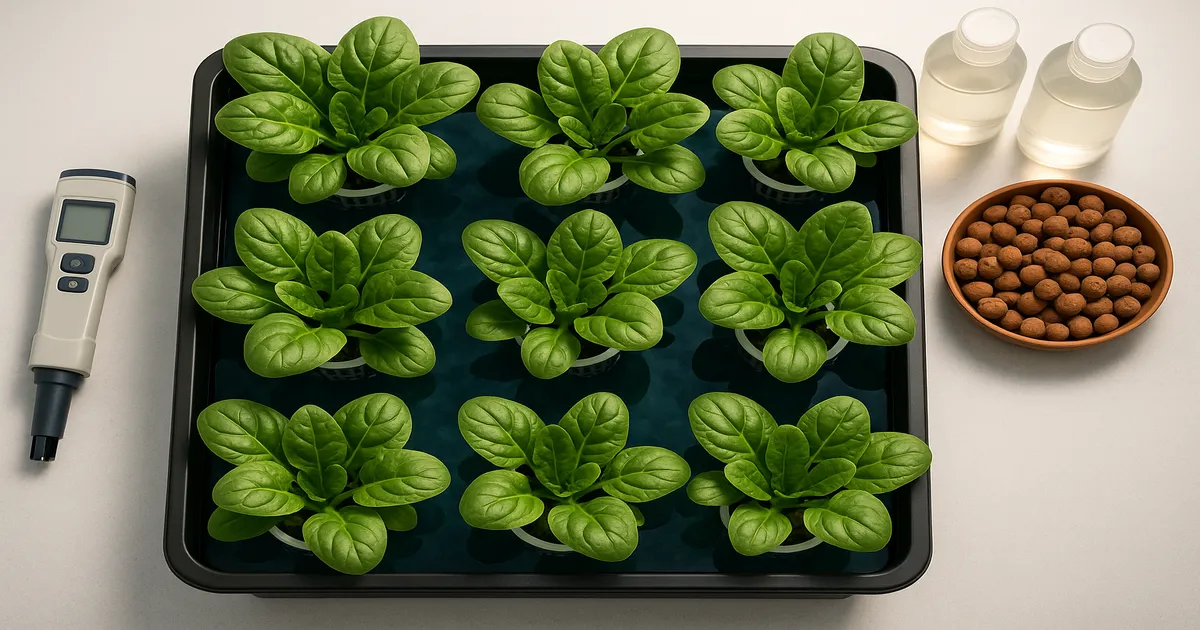
Plants sit in net pots above a reservoir, with roots suspended directly in oxygenated nutrient solution. An air pump and air stones keep dissolved oxygen high. DWC is simple, inexpensive, and produces explosive vegetative growth — it’s the most popular system among home growers for good reason. Hydroton (clay pebbles), rockwool cubes, or rapid rooter plugs all work well as starting media.
Recirculating DWC (RDWC): Scaling Up at Home
RDWC connects multiple plant buckets to a central reservoir via tubing. You manage nutrients and pH in one place, and the solution circulates continuously. It’s more complex to set up but makes managing a multi-plant grow far more practical.
Nutrient Film Technique (NFT): Space-Efficient Growing
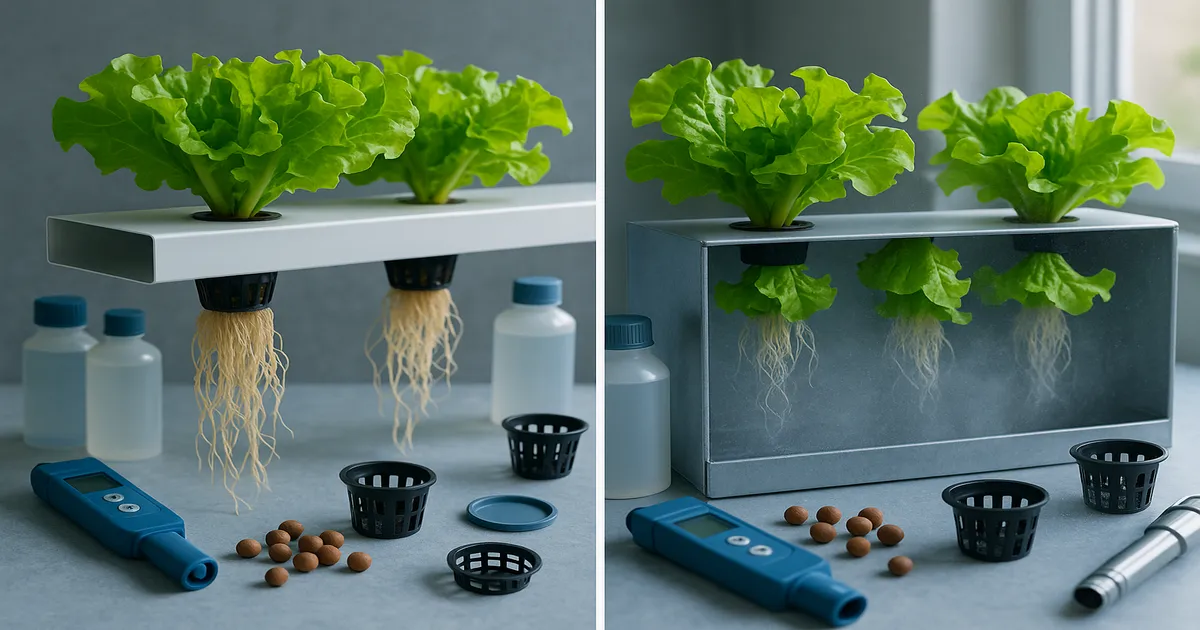
A thin film of nutrient solution flows continuously over bare roots in sloped channels. NFT uses very little water and no growing medium, making it ideal for tight spaces. The downside: if your pump fails, roots dry out within minutes.
Ebb and Flow (Flood and Drain): Flexible and Forgiving
The grow tray floods with nutrient solution on a timer, then drains back to the reservoir. It works with almost any growing medium — hydroton, rockwool slabs, or coco coir — and handles multiple plants easily. Great for growers who want flexibility without committing to a single medium.
Drip Systems: Commercial-Style Control
Nutrient solution drips to the base of each plant on a schedule. Drip systems scale from a single plant to dozens and are the backbone of most commercial cannabis operations. Recirculating drip setups require diligent reservoir management to prevent salt buildup, but they’re adaptable and forgiving overall.
Aeroponics: Maximum Speed for Advanced Growers
Roots hang in the air and are misted with fine nutrient droplets at timed intervals. Oxygen delivery is unmatched and growth rates are the fastest of any system. The tradeoff is complexity — nozzle clogs and pump failures are catastrophic. Not recommended for first-time growers.
Kratky Method: Passive Growing on a Tight Budget
A passive variation of DWC with no pump, no electricity for the reservoir, and no recirculation. Plants start with roots partially submerged; as they drink the solution down, an air gap forms above the waterline. Dead simple and nearly zero-cost, but less scalable and harder to manage through peak flower.
System Comparison
| System | Skill Level | Relative Cost | Best Use Case |
|---|---|---|---|
| DWC | Beginner–Intermediate | Low | Fast growth, 1–4 plants |
| RDWC | Intermediate | Medium | Multi-plant home grows |
| NFT | Intermediate | Low–Medium | Space-limited setups |
| Ebb & Flow | Intermediate | Medium | Multiple plants, media flexibility |
| Drip | Beginner–Advanced | Medium–High | Large or commercial-style grows |
| Aeroponics | Advanced | High | Maximum speed, R&D |
| Kratky | Beginner | Very Low | Budget-conscious small grows |
Setting Up Your System: Equipment and Environment
Essential Equipment Checklist
- Reservoir (5+ gallons per plant; 10 gallons per plant for better stability)
- Air pump and air stones (DWC/RDWC)
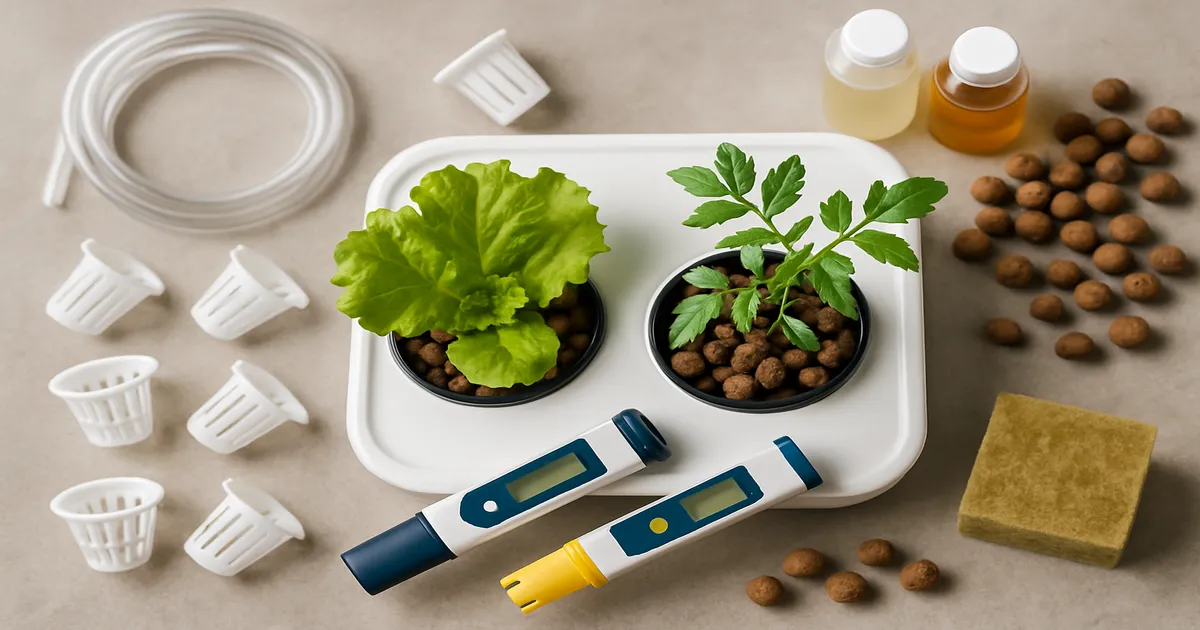
- Net pots and growing medium (hydroton, rockwool, or coco coir)
- pH meter and EC/TDS meter
- pH Up and pH Down solutions
- 3-part or 2-part base nutrient line
- Cal-Mag supplement
- Grow tent with reflective interior (AC Infinity CLOUDLAB 844)
- Inline fan and carbon filter
- Full-spectrum LED grow light (Spider Farmer SF-4000)
- Timer for lights and pumps
Grow Space and Airflow
A 4×4 ft tent handles 4–6 plants comfortably in a DWC or RDWC setup. Pair it with a 6-inch inline fan to maintain negative pressure — air should pull in slightly at the tent seams, not push out. Target ambient temperature of 70–80°F (21–27°C) with lights on. Keep relative humidity around 60–70% in veg and 40–50% in flower to reduce mold risk.
Reservoir Setup
Bigger reservoirs buffer pH and EC fluctuations far better than small ones. Light-proof your reservoir completely — any light reaching the nutrient solution will grow algae within days. Black reservoirs or opaque lids with no gaps are essential. Keep reservoir temperature at 65–72°F (18–22°C); warmer water holds less dissolved oxygen and creates ideal conditions for root rot pathogens.
Growing Media Preparation
- Hydroton: Rinse thoroughly before use; reusable; excellent drainage
- Rockwool: Pre-soak in pH 5.5 water for 24 hours to neutralize alkalinity before use
- Coco coir: Treat identically to hydroponics — target pH 5.8–6.2; buffered coco is easier to manage
- Rapid rooter plugs: Best for germinating seeds and rooting clones before transplanting
Water Source
Tap water above 200 PPM of dissolved minerals makes EC management unpredictable — you’re starting with an unknown nutrient baseline. Reverse osmosis (RO) water starts near 0 PPM, giving you complete control. If you use tap water, measure its PPM first and subtract that figure from your target EC calculations.
Nutrients for a Hydroponic Cannabis Grow System
N-P-K Ratios by Growth Stage
Cannabis has very different nutritional priorities at each stage:
- Vegetative (approx. 3-1-2 ratio): High nitrogen drives leafy growth and strong stems.
- Early Flower (approx. 1-3-2 ratio): Drop nitrogen sharply. Elevated phosphorus supports bud development.
- Peak/Late Flower (approx. 0-3-3 ratio): Nitrogen near zero. High phosphorus and potassium maximize bud density and terpene production.
Excess nitrogen in flower is one of the most common mistakes — it causes airy buds and chlorophyll retention in the finished product.
Secondary Macronutrients: Calcium, Magnesium, and Sulfur
These are often underdosed in hydroponic systems, especially with RO water, which contains none of them naturally.
- Calcium: 200–300 PPM; prevents tip burn and supports cell wall integrity
- Magnesium: 50–80 PPM; central atom of chlorophyll; deficiency shows as interveinal yellowing on older leaves
- Sulfur: 50–100 PPM; supports enzyme function and terpene synthesis
A quality Cal-Mag supplement covers calcium and magnesium in one product.
EC and PPM Targets by Growth Stage
| Growth Stage | PPM (500 scale) | EC |
|---|---|---|
| Seedling / Clone | 100–250 PPM | 0.2–0.5 |
| Early Vegetative | 400–600 PPM | 0.8–1.2 |
| Late Vegetative | 600–900 PPM | 1.2–1.8 |
| Early Flower | 800–1,000 PPM | 1.6–2.0 |
| Peak Flower | 1,000–1,400 PPM | 2.0–2.8 |
| Late Flower / Flush | 0–400 PPM | 0.0–0.8 |
PPM readings use the 500 scale (Hanna). The 700 scale reads approximately 1.4× higher — confirm which scale your meter uses.
Recommended Nutrient Lines
- General Hydroponics Flora Series — 3-part system, highly flexible, extensively documented for cannabis
- Advanced Nutrients pH Perfect — auto-buffers pH; ideal for beginners who struggle with pH management
- Canna Aqua / Canna Hydro — European standard, excellent for DWC and NFT
- Athena Nutrients — 2-part blended system popular in semi-commercial grows
- Jack’s Nutrients 321 — Part A, Part B, and Epsom salt; extremely cost-effective for experienced growers
Beneficial Additives
Silica is the most impactful additive most growers overlook. It strengthens cell walls, improves heat tolerance, and increases pest resistance. Always add silica to your reservoir first, before any other nutrients — it raises pH significantly and can react with other elements if added out of order. (General Hydroponics Armor Si)
Hydroguard (Bacillus amyloliquefaciens) suppresses root rot and promotes healthy root mass. Add it at every reservoir change as a preventive measure.
Humic and fulvic acids improve nutrient chelation and uptake efficiency. Carbohydrate supplements (molasses, sugar-based boosters) are controversial in recirculating systems — they can feed harmful bacteria. Use with caution or avoid entirely in DWC and RDWC.
pH and EC Management
Ideal pH Range and pH Cycling
Target pH 5.5–6.2, with the sweet spot at 5.8–6.0. Rather than locking pH at a single number, allow it to drift naturally across the full 5.5–6.2 range — a practice called pH cycling. Different nutrients become available at different pH points, so controlled drift actually improves uptake across the board.
Below pH 5.5, calcium, magnesium, and phosphorus lock out. Above pH 6.5, iron, manganese, and zinc become unavailable.
Measuring and Calibrating Your pH Meter
A quality digital pH meter is non-negotiable. The Apera PC60 and Bluelab pH Pen are both reliable choices. Calibrate with pH 4.0 and 7.0 buffer solutions at least once per week during active grows. Store the probe in proper storage solution — not tap water, not distilled water — to preserve the membrane.
Adjusting pH
Always mix your full nutrient solution before checking or adjusting pH. Nutrients shift pH on their own, so adjusting beforehand means you’ll be adjusting twice.
- pH Down: Phosphoric acid is standard. Citric acid is an organic option but less stable in solution.
- pH Up: Potassium hydroxide is most common. Potassium silicate also raises pH naturally.
Add adjusters 1 mL at a time, let the solution mix for 30–60 seconds, then re-test. Never dump a large amount in at once.
EC Monitoring and Reservoir Maintenance
Check reservoir EC every day. Plants drink water faster than they consume nutrients, so EC tends to rise between feedings.
- EC rising: Top off with plain, pH-adjusted water — don’t add more nutrients
- EC dropping: Plants are actively feeding; top off with fresh nutrient solution at your target strength
Change your reservoir completely every 7–10 days in recirculating systems. Nutrient salt buildup, bacterial growth, and pH instability all compound over time.
Common pH and EC Problems
| Problem | Likely Cause | Fix |
|---|---|---|
| pH drifting up | Plant nitrate uptake, algae, CO₂ off-gassing | Add pH Down; check for light leaks |
| pH crash (rapid drop) | Bacterial bloom, organic decomposition | Full reservoir change; add Hydroguard |
| EC rising | Plants drinking water faster than nutrients | Top off with plain pH-adjusted water |
| EC dropping | Active feeding (healthy in veg/early flower) | Top off with fresh nutrient solution |
Lighting for Your Hydroponic Cannabis Grow System
Spectrum Basics
Each part of the spectrum serves a different purpose:
- Blue (400–500 nm): Compact vegetative growth, tight internodal spacing
- Red (620–700 nm): Drives photosynthesis and flowering
- Far-red (700–750 nm): Triggers the Emerson Effect, accelerating flowering onset
- UV-A (315–400 nm): Stimulates trichome and terpene production — most valuable in the final weeks of flower
Full-spectrum white LEDs (3000K–5000K) cover all of these naturally. Older blurple LEDs (blue + red only) are less efficient and make it harder to spot plant health issues visually.
PPFD Targets by Growth Stage
| Growth Stage | Target PPFD |
|---|---|
| Seedling / Clone | 100–300 µmol/m²/s |
| Vegetative | 400–600 µmol/m²/s |
| Early Flower | 600–900 µmol/m²/s |
| Peak Flower | 900–1,200 µmol/m²/s |
Without CO₂ supplementation, cannabis reaches light saturation around 1,000–1,200 µmol/m²/s. Pushing beyond that without elevated CO₂ (1,000–1,500 PPM) causes photoinhibition, not faster growth.
DLI targets: 35–50 mol/m²/day for vegetative, 35–45 mol/m²/day for flower. Calculate it as: PPFD × hours × 3.6 ÷ 1,000.
Frequently Asked Questions
What is the best hydroponic system for cannabis beginners? Deep Water Culture (DWC) is the best starting point. It’s inexpensive, easy to understand, and produces fast growth. A single-bucket DWC setup with a quality air pump and a reliable pH meter is all you need to get started.
How often should I change my hydroponic reservoir? Every 7–10 days in recirculating systems. Between changes, top off daily with pH-adjusted water or fresh nutrient solution depending on whether your EC is rising or falling. Never let the reservoir go longer than two weeks without a full change.
What pH should I maintain in a hydroponic cannabis system? Target 5.5–6.2, with 5.8–6.0 as the ideal center point. Allow natural drift across the full range rather than chasing a single number — this pH cycling ensures plants can access the complete nutrient spectrum.
Can I use tap water in a hydroponic cannabis grow system? Yes, but measure its PPM first. Tap water above 200 PPM introduces an unpredictable nutrient baseline that makes EC management harder. RO water at near 0 PPM gives you full control and is strongly recommended for serious grows.
How do I prevent root rot in DWC? Keep reservoir temperature at 65–72°F (18–22°C), maintain high dissolved oxygen with a quality air pump, block all light from reaching the reservoir, and add a beneficial bacteria product like Botanicare Hydroguard at every reservoir change. Root rot is almost always a temperature and oxygen problem first.
Always check your local and regional laws before cultivating cannabis. This guide is intended for legal grows only.