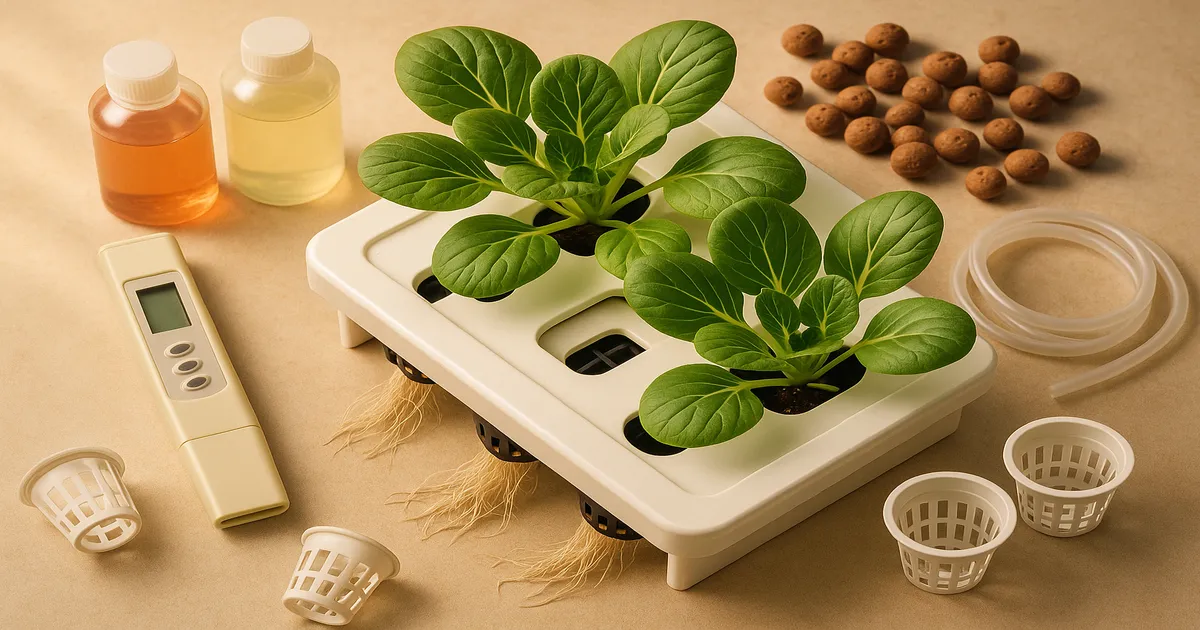

Quick Answer: For most Indian growers, HS Hydroponics A+B or Katyayani are the best domestic options for value and availability. Among imported brands, the General Hydroponics Flora Series leads for precision and stage-by-stage control. Whatever you choose, maintain pH 5.5–6.5 and EC between 0.8–3.2 (400–1600 PPM) depending on growth stage — and always measure your tap water’s baseline TDS before mixing.
Finding the best hydroponic nutrient solution in India isn’t just about picking a popular brand. It’s about matching your nutrients to your water quality, climate zone, and crop type. India’s tap water, summer heat, and regional hardness all affect how your solution behaves in ways that most Western growing guides never address. This guide covers brand reviews, DIY recipes, EC and pH management, and troubleshooting — all tailored for Indian conditions.
Best Hydroponic Nutrient Solutions in India: Top Picks at a Glance
Recommended by Category
Beginner:
- HS Hydroponics A+B — easy two-part system, widely available online, formulated with Indian water in mind
- Katyayani Hydroponic Nutrient — affordable, simple dosing (2–4 mL/L), good for NFT and DWC setups
Commercial:
- General Hydroponics Flora Series — industry-standard 3-part system with precise stage-by-stage control
- Canna — premium European brand, excellent for fruiting crops, available through specialty hydroponics retailers
Budget DIY:
- Custom formulas using Calcium Nitrate, Potassium Nitrate, MKP, and Epsom Salt — all available at agri-input stores across India for a fraction of branded prices
Key Numbers Every Indian Grower Must Know
| Parameter | Range | Notes |
|---|---|---|
| pH | 5.5–6.5 | Most Indian tap water needs to be brought down from 7.5–8.5 |
| EC (Seedling) | 0.2–0.8 | Very dilute — avoid root burn |
| EC (Vegetative) | 0.8–2.4 | Ramp up gradually |
| EC (Fruiting) | 2.4–3.2 | High-K phase |
| Tap Water TDS | 200–600 PPM | Always measure before mixing |
Why Indian Conditions Demand a Different Nutrient Approach
In soil farming, the earth buffers and supplies a wide range of minerals. In hydroponics, your nutrient solution does all of that work alone. Every element the plant needs must be dissolved in the water reaching its roots. Get the formula wrong and your plants suffer fast.
How India’s Climate Affects Nutrient Behaviour
Cities like Chennai, Hyderabad, and Ahmedabad regularly hit 40°C in summer. At those temperatures, water evaporates from your reservoir faster than plants consume nutrients, causing EC to creep upward and stress your crop. Monsoon humidity, on the other hand, slows transpiration and reduces uptake. Both extremes require active management — this is not something most Western nutrient guides prepare you for.
The Problem with Indian Tap Water
Most Indian municipal water arrives at pH 7.5–8.5 with a baseline TDS of 200–600 PPM (0.4–1.2 EC). That baseline counts against your target nutrient concentration, so you’re already working with a partial solution before you add anything. Hard water in Delhi and Bengaluru contains high bicarbonate levels that cause persistent pH creep — your solution will drift upward daily unless you treat the source water or switch to RO.
Mumbai and Chennai water is generally softer, but even there, you can’t skip testing. Monsoon season can shift source water chemistry unpredictably in coastal regions.
Macronutrients and Micronutrients: What Your Plants Actually Need
Primary Macronutrients: NPK
Nitrogen (N) drives vegetative growth and chlorophyll production. Target 150–250 PPM during the vegetative stage. For leafy crops, maintain a higher N:K ratio of around 1.5:1. For fruiting crops, reduce nitrogen at flowering to prevent excessive foliage at the expense of fruit.
Phosphorus (P) supports root development and energy transfer. Target 30–60 PPM during vegetative growth, rising to 60–80 PPM at flowering. Potassium (K) governs fruit quality, disease resistance, and stomatal regulation — target 150–300 PPM, with the highest concentrations during fruiting.
Secondary Macronutrients: Calcium, Magnesium, and Sulfur
Calcium is especially critical for Indian growers using RO or soft water. Without adequate Ca (target 150–200 PPM), tomatoes develop blossom end rot — a common and entirely preventable problem. Always supplement calcium when using RO-filtered water.
Maintain a Ca:Mg ratio of 3:1 to 4:1. Magnesium (target 30–60 PPM) sits at the centre of every chlorophyll molecule, so deficiency appears quickly as yellowing between leaf veins. Sulfur (50–100 PPM) supports amino acid synthesis and is usually supplied incidentally through Epsom Salt and sulfate-based fertilizers.
Essential Micronutrients and Deficiency Signs
| Micronutrient | Target PPM | Deficiency Sign |
|---|---|---|
| Iron (Fe) | 2–5 ppm | Interveinal chlorosis on young leaves |
| Manganese (Mn) | 0.5–1 ppm | Brown spots, stunted growth |
| Zinc (Zn) | 0.05–0.5 ppm | Small leaves, shortened internodes |
| Boron (B) | 0.1–0.5 ppm | Hollow stems, poor fruit set |
| Copper (Cu) | 0.01–0.05 ppm | Wilting, blue-green tint |
| Molybdenum (Mo) | 0.01–0.05 ppm | Cupping leaves, pale colour |
| Chlorine (Cl) | 0.5–1 ppm | Wilting, bronzed leaves |
Iron deficiency — interveinal chlorosis on new growth — is the most common micronutrient problem in India. It’s usually triggered by high pH rather than an actual iron shortage. Fix the pH first before adding more iron.
Brand Reviews: Best Hydroponic Nutrient Solutions Available in India
Domestic Brands: HS Hydroponics, Katyayani, Multiplex, Anshul
HS Hydroponics A+B is arguably the most popular domestic brand among Indian hobbyists and small commercial growers. Dose at 5–10 mL of each part per litre. It’s formulated with Indian water quality in mind and is available on Amazon India and Flipkart.
Katyayani Hydroponic Nutrient is an affordable one- or two-part solution dosed at 2–4 mL/L — a solid beginner option widely stocked on agri-input platforms. Multiplex Hydroponic Nutrient Solution (3–5 mL/L) is particularly popular in Karnataka and Maharashtra, where it’s available through agricultural dealers as well as online. Anshul is worth considering for commercial growers who need local supply chains and bulk pricing.
Imported Brands: General Hydroponics, Canna, Plagron
The General Hydroponics Flora Series is a 3-part system (Flora Grow, Flora Micro, Flora Bloom) that gives you precise control at every growth stage:
- Vegetative: 5 mL Grow + 5 mL Micro + 2 mL Bloom per 4 L
- Flowering: 2 mL Grow + 5 mL Micro + 8 mL Bloom per 4 L
Canna nutrients are premium-grade and particularly effective for fruiting crops like tomatoes and capsicum. Plagron is less common in India but available through specialty importers. Expect to pay 3–5× more than domestic brands for imported nutrients — worth it for commercial operations where consistency matters, less so for hobby growers.
Two-Part vs Three-Part Systems
Two-part systems like HS Hydroponics A+B are simpler: mix equal parts, adjust pH, done. They’re ideal for beginners and single-crop setups. Three-part systems like the Flora Series let you adjust N:P:K ratios by stage, which matters when you’re growing fruiting crops through multiple phases or running a commercial operation with different crop zones.
For most home growers in India, a quality two-part system is all you need. If you’re growing tomatoes or capsicum commercially and want to optimise yield, a three-part system is worth the investment.
Price Comparison and Where to Buy
| Brand | Type | Approx. Price | Where to Buy |
|---|---|---|---|
| HS Hydroponics A+B | 2-part domestic | ₹400–₹800/L | Amazon, Flipkart, specialty shops |
| Katyayani | 1–2 part domestic | ₹300–₹600/L | Amazon, agri-input stores |
| Multiplex | Domestic | ₹350–₹700/L | Agri dealers, online |
| GH Flora Series | 3-part imported | ₹1,500–₹3,000/set | Hydroponics specialty stores, Amazon |
| Canna | Imported | ₹2,000–₹5,000/L | Specialty hydroponics retailers |
DIY Hydroponic Nutrient Solution Recipes for Indian Growers
Recipe 1: General-Purpose Vegetative Formula (per 100 Litres)
Target: 800–1,000 PPM (1.6–2.0 EC) — ideal for lettuce, spinach, herbs
- Calcium Nitrate [Ca(NO₃)₂]: 70–80 g
- Potassium Nitrate [KNO₃]: 30–40 g
- Monopotassium Phosphate [KH₂PO₄]: 20–25 g
- Epsom Salt [MgSO₄·7H₂O]: 25–30 g
- Chelated micronutrient mix: 5–10 mL commercial concentrate
Recipe 2: Fruiting Formula for Tomatoes and Capsicum (per 100 Litres)
Target: 1,200–1,400 PPM (2.4–2.8 EC)
- Calcium Nitrate: 80–90 g
- Potassium Nitrate: 50–60 g
- Monopotassium Phosphate: 35–40 g
- Epsom Salt: 30–35 g
- Potassium Sulfate [K₂SO₄]: 20–25 g (boosts K during fruiting)
- Chelated micronutrient mix: 8–12 mL
Recipe 3: Budget Formula Using Local Agricultural Inputs (per 100 Litres)
Target: 700–900 PPM (1.4–1.8 EC) — all inputs available at agri-input stores
- Calcium Nitrate: 50–60 g
- Urea (46-0-0): 5–8 g (use sparingly — ammoniacal N can lower pH)
- DAP (Diammonium Phosphate): 10–12 g
- MOP (Muriate of Potash): 15–20 g
- Epsom Salt: 20–25 g
⚠️ Warning: Agricultural-grade fertilizers contain impurities that accumulate over time. MOP adds chloride, which builds up in closed systems. Monitor EC closely and flush every 10–14 days. This formula works as a starting point — upgrade to food-grade or hydroponics-grade salts as your system scales.
How to Mix Nutrients: Step-by-Step Order of Addition
- Start with 80–90% of your final water volume (RO or treated tap water)
- Dissolve Calcium Nitrate separately in a small bucket first
- Add the dissolved Calcium Nitrate to your main reservoir
- Dissolve remaining salts (Potassium Nitrate, MKP, Epsom Salt) separately, then add one at a time
- Never mix Calcium Nitrate directly with Phosphate or Sulfate salts — they will precipitate and lock out nutrients
- Add micronutrients or commercial micro concentrate last
- Top up to final volume, stir thoroughly, then check and adjust pH
- Recheck EC and pH after 30 minutes before use
EC, PPM, and pH Management for Indian Conditions
EC and PPM Targets from Seedling to Final Flush
| Growth Stage | PPM | EC | Notes |
|---|---|---|---|
| Seedling | 100–400 | 0.2–0.8 | Very dilute; avoid burn |
| Early Vegetative | 400–800 | 0.8–1.6 | Ramp up gradually |
| Late Vegetative | 800–1,200 | 1.6–2.4 | Full nutrient load |
| Early Flowering | 1,000–1,400 | 2.0–2.8 | Increase P and K |
| Fruiting | 1,200–1,600 | 2.4–3.2 | High K, reduce N |
| Final Flush | 0–400 | 0–0.8 | Plain water or very dilute |
How Indian Summer Heat Causes EC Creep
When temperatures push past 35°C, water evaporates from your reservoir much faster than plants drink nutrients. EC rises — sometimes dangerously — without you adding anything. The fix is simple but easy to forget: always top off with plain water, not nutrient solution. Check EC daily during summer.
Shade your reservoir and insulate it with foam or reflective material. Keeping solution temperature below 22°C also improves dissolved oxygen levels and prevents root rot. A small aquarium chiller or frozen water bottles can help during peak summer months.
When to Change Your Reservoir
- Small systems (under 20 L): Every 7–10 days
- Medium systems: Every 14 days
- Large commercial systems: Every 21–28 days, or whenever EC drifts more than 0.5 above target
When changing, flush briefly with plain water before refilling. This removes salt buildup from root zones and growing media.
Choosing the Right EC and pH Meters for India
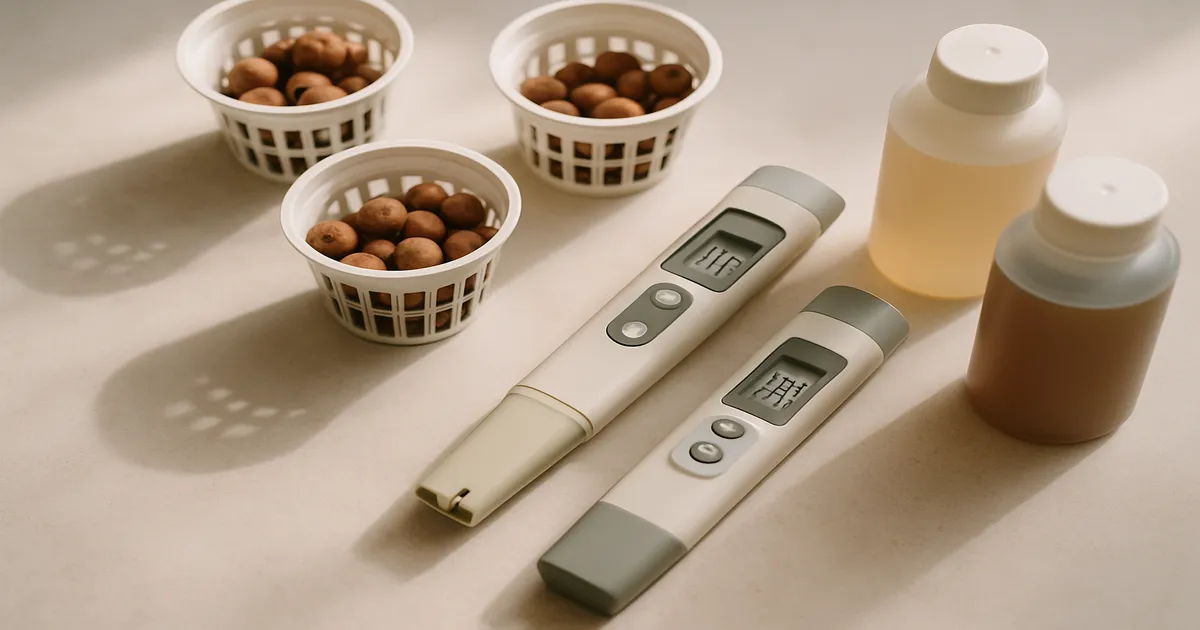
Accurate meters are non-negotiable. For home growers, the HM Digital TDS-EZ (₹500–₹1,500) is a reliable, affordable TDS meter. The HM Digital COM-80 handles both EC and temperature and suits serious hobbyists (₹1,500–₹3,000). For pH, the Apera PH20 is a well-regarded entry-level pen that holds calibration well in humid conditions. Commercial setups benefit from continuous monitoring with a Bluelab Guardian Monitor (₹15,000–₹40,000) — catching a pH or EC problem early can save an entire crop.
pH Management for Indian Water
Most Indian growers need to bring pH down. Municipal water at pH 8.0 needs significant adjustment before nutrients are even added.
- Phosphoric acid (pH Down): Most commonly available; also adds phosphorus, so use carefully to avoid P excess
- Nitric acid: Preferred commercially; adds nitrogen rather than phosphorus
- Citric acid: Organic option, but degrades quickly and can encourage bacterial growth — not ideal for recirculating systems
- Potassium hydroxide (pH Up): Use when RO water or an acidic source pushes pH too low; adds potassium rather than sodium, making it preferable to sodium hydroxide in nutrient solutions
A rough starting point: 1–2 mL of pH Down per 10 litres drops pH by approximately 1 unit. Always add in small increments and retest. Never add pH adjusters directly to concentrated nutrient stock — always dilute first.
Ideal pH ranges by crop:
- Leafy greens (lettuce, spinach, kale): 5.5–6.5 (optimal 6.0)
- Fruiting vegetables (tomato, capsicum, cucumber): 5.8–6.5 (optimal 6.2)
- Herbs (basil, mint, coriander): 5.5–6.5
- Strawberries: 5.5–6.0
Frequently Asked Questions
Q: What is the best hydroponic nutrient solution in India for beginners? HS Hydroponics A+B is the most beginner-friendly domestic option. It’s a simple two-part system, widely available on Amazon and Flipkart, and formulated to work with India’s typically hard, high-pH tap water. Katyayani is a close second if you want a lower entry price.
Q: Can I use regular agricultural fertilizers for hydroponics in India? Yes, but with caution. Agricultural-grade inputs like Calcium Nitrate, Potassium Nitrate, and Epsom Salt work well and are widely available. Avoid MOP (Muriate of Potash) in closed recirculating systems — the chloride accumulates over time. Flush your system every 10–14 days and upgrade to hydroponics-grade salts as your setup scales.
Q: How do I deal with high TDS tap water in Indian cities? Measure your tap water’s baseline TDS before mixing any nutrients. If it reads above 400 PPM, consider using a basic RO filter to bring it down to 50–100 PPM before mixing. This gives you a clean starting point and full control over your nutrient ratios. If RO isn’t an option, subtract your tap water TDS from your target PPM and adjust your nutrient dose accordingly.
Q: How often should I change my nutrient solution in India’s summer heat? More frequently than Western guides suggest. In summer, top off daily with plain water to counteract EC creep from evaporation. Do a full reservoir change every 7–10 days for small systems, or whenever EC drifts more than 0.5 above your target. Insulate your reservoir to slow evaporation and keep solution temperature below 22°C.
Q: Are imported nutrient brands like General Hydroponics worth the price in India? For commercial growers, yes — the consistency and stage-specific control justify the cost when you’re optimising yield on fruiting crops. For home hobbyists growing leafy greens or herbs, a quality domestic brand like HS Hydroponics A+B delivers excellent results at a fraction of the price.