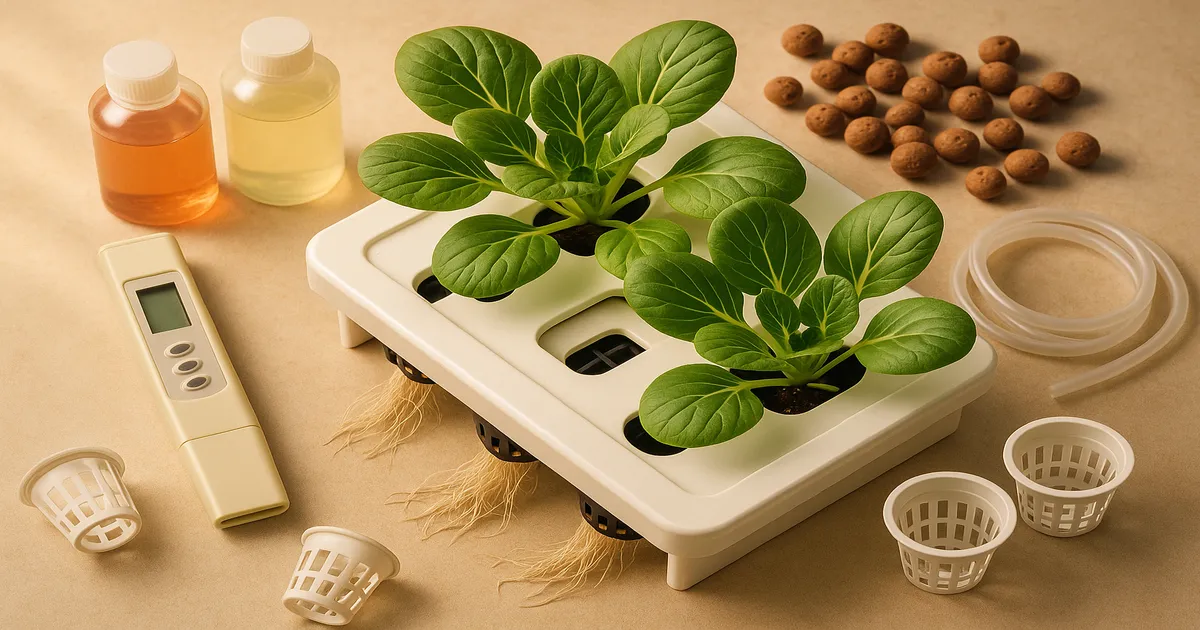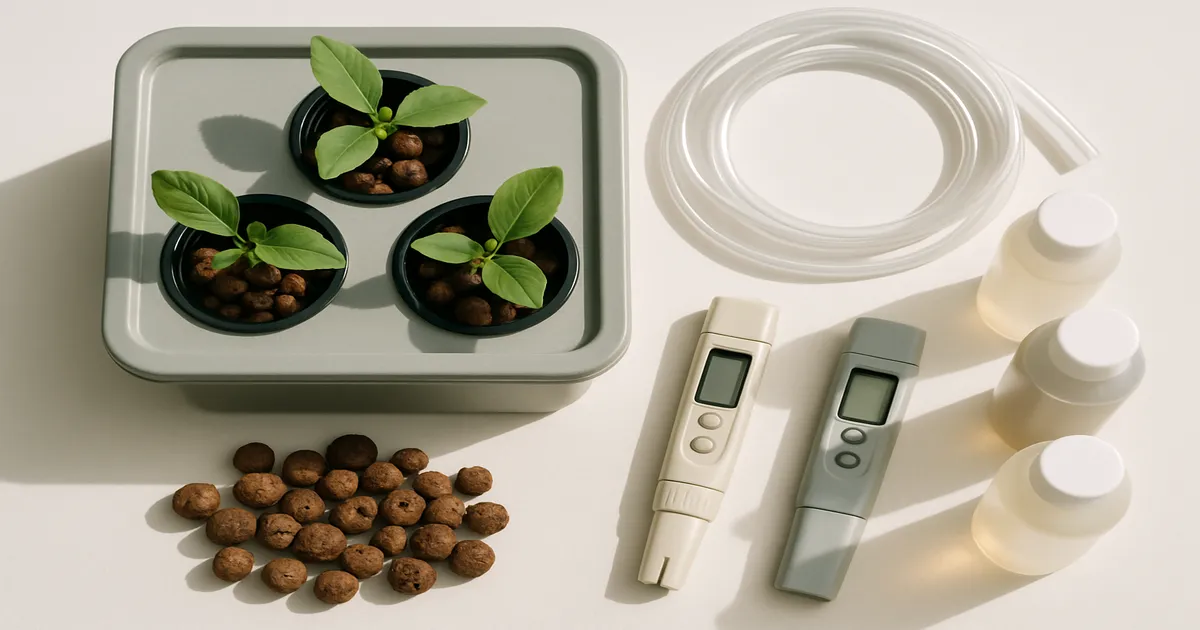
Quick Answer: Top up your nutrient medium when reservoir volume drops more than 10–20% from its starting level, or when your EC/PPM drifts noticeably from your target range. Whether you add plain water or a fresh nutrient mix depends on which direction your EC is moving — always measure before you add anything.
Knowing when to top up your nutrient medium is one of those skills that separates growers who get consistent harvests from those who constantly chase problems. Plants consume water and dissolved nutrients at completely different rates, so your reservoir composition shifts constantly — sometimes subtly, sometimes fast. Check it daily and you’ll catch issues early. Ignore it and you’re gambling with your crop.
When Should You Top Up Your Nutrient Medium?
The Two Core Signals
Two things tell you a top-up is overdue:
- Reservoir volume has dropped — a measurable drop of 10–20% or more from your starting volume
- EC/PPM has drifted from your target — either rising (plants drinking more water than nutrients) or falling (plants consuming nutrients faster than water)
Neither signal alone tells the full story. Dropping volume with rising EC means your plants are thirsty — add plain water. Dropping volume with falling EC means they’re hungry — add a fresh nutrient mix. That’s why you always measure before you act.
The 10–20% Volume Rule
When your reservoir drops by 10–20% of its total capacity, top up. For a 10-gallon reservoir, that’s 1–2 gallons. Don’t wait until it looks nearly empty — by then, roots may already be exposed or EC may have swung far enough to stress your plants.
Why Nutrient Medium Needs Topping Up
Differential Uptake: Water and Nutrients Deplete at Different Rates
Plants pull water through transpiration and absorb nutrients through root ion exchange — two processes running on completely independent timelines. On a hot day under bright lights, your plants might transpire aggressively while barely touching their calcium or potassium. Volume drops, but EC climbs, because the same dissolved nutrients are now concentrated in less water.
The reverse happens during heavy vegetative growth or peak fruiting. Nutrient demand spikes, EC falls, and topping up with plain water only dilutes an already depleted solution. Understanding this push-pull dynamic is the foundation of good reservoir management.
How Temperature and Light Intensity Accelerate Depletion
Running high-intensity LEDs or growing through a summer heat wave? Expect to top up more often. Higher light levels drive faster photosynthesis, which accelerates both water uptake and nutrient demand. Reservoir temperature above 72°F (22°C) also increases evaporation and reduces dissolved oxygen. During heat waves, check your reservoir every 12 hours minimum.
What Happens If You Miss Top-Ups
Neglect compounds fast. In a DWC system, falling water levels can expose roots to air within hours. EC climbing unchecked leads to salt toxicity. pH swings follow because nutrient concentration directly affects buffering capacity. Stunted plants, nutrient lockout, or crop failure are almost always traceable back to missed top-ups.
The Top-Up Decision Matrix: What EC and Volume Are Telling You
Before touching anything, take two readings: current volume and current EC. Then use this table:
| Reservoir Volume | EC/PPM Status | Action |
|---|---|---|
| Low (>10–20% drop) | EC rising | Add plain pH-adjusted water |
| Low (>10–20% drop) | EC falling | Add fresh nutrient solution at target strength |
| Low (>10–20% drop) | EC stable | Add half-strength nutrient solution |
| Volume normal | EC rising significantly | Partial change — dilute with plain water |
| Volume normal | EC falling significantly | Add concentrated nutrient mix to restore target |
EC rising + volume low: Your plants are drinking water faster than nutrients. Top up with plain pH-adjusted water — don’t add more nutrients or you’ll push EC even higher.
EC falling + volume low: Heavy feeders during flowering can strip nutrients fast. Mix a fresh batch at your target strength and use that to top up.
EC stable + volume low: Uptake is balanced. A half-strength solution maintains that balance without overshooting in either direction.
Volume normal but EC drifting: You’re dealing with a concentration shift, not a volume issue. For rising EC, remove a portion of the reservoir and replace with plain water. For falling EC, add a measured dose of concentrated nutrient mix. Use this formula:
Volume to add = (Target EC − Current EC) ÷ (Concentrate EC − Target EC) × Current Volume
How to Know When to Top Up Your Nutrient Medium: Monitoring Tools and Frequency
Essential Meters
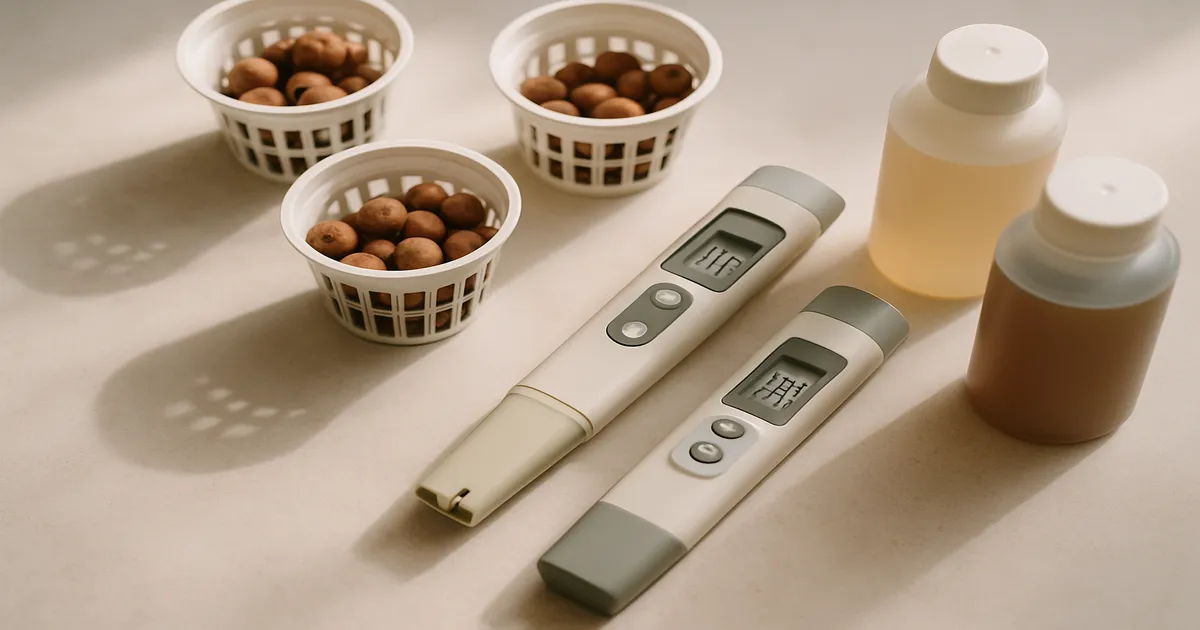
A reliable digital pH meter (Apera PH20) and an EC/TDS pen (Bluelab Truncheon) are non-negotiable. Calibrate your pH meter weekly using pH 4.0 and 7.0 buffer solutions, and store the probe in storage solution — never dry. Rinse your EC pen with distilled water after every use to prevent salt buildup on the electrodes.
Analog pH test kits make a decent backup — inexpensive and reliable enough for a quick sanity check — but at ±0.2–0.5 pH accuracy, they’re not precise enough for daily management.
Continuous Monitoring Systems
For larger systems or when you’re away for a day or two, continuous monitors like the Bluelab Guardian Monitor log pH and EC in real time and alert you to drift before it becomes a problem. These are especially valuable during peak flowering.
How Often to Check
| System Size / Stage | Check Frequency |
|---|---|
| Small reservoir (<5 gallons) | Every 12–24 hours |
| Medium reservoir (5–20 gallons) | Every 24–48 hours |
| Large reservoir (>20 gallons) | Every 48–72 hours |
| Heat waves or high-light periods | Every 12 hours minimum |
| Peak flowering / fruiting | Daily |
A sight glass or float gauge lets you check volume at a glance without opening the reservoir — useful for DWC buckets or large systems where lifting the lid daily is impractical. Some growers simply mark level lines on the outside of a translucent reservoir with a marker. Low-tech, but it works.
System-Specific Top-Up Guidance
DWC: Roots hang directly in the nutrient solution, so even a few inches of volume loss can leave root tips in air. Check daily without exception. In a 5-gallon bucket, a single hot day can drop volume by half a gallon or more.
NFT: Reservoirs are often small, so concentration swings happen quickly. In warm conditions, daily top-ups are common. Watch EC closely.
Kratky: This passive method relies on an intentional air gap between the water surface and the net pot to keep roots oxygenated. When you top up, never fill back to the original level. Maintain a 1–2 inch air gap or you’ll drown the upper roots.
Ebb & Flow: Evaporation between flood cycles steadily reduces reservoir volume. Check before each flood cycle in warm conditions.
Drip (recirculating): Runoff returns to the reservoir, but evaporation and plant uptake still reduce volume over time. Top up to restore both volume and nutrient concentration.
Aeroponics: Constant high-pressure misting depletes reservoirs faster than almost any other system. Daily checks are essential; in peak summer heat, you may need to top up twice a day.
Target pH and EC Ranges for a Healthy Nutrient Medium
Ideal pH by System Type
| System | Recommended pH |
|---|---|
| Hydroponic (general) | 5.5–6.5 |
| DWC / Aeroponics | 5.5–6.2 |
| NFT / Ebb & Flow | 5.8–6.3 |
| Kratky | 5.8–6.2 |
The sweet spot for most crops is pH 5.8–6.2. Above 6.5, iron, manganese, and zinc become unavailable. Below 5.5, calcium and magnesium lock out. Aim for the range, not a single number — a little natural drift is normal and healthy.
EC and PPM Targets by Growth Stage
| Growth Stage | PPM (500-scale) | EC (mS/cm) |
|---|---|---|
| Seedling / Clone | 100–400 | 0.2–0.8 |
| Early Vegetative | 400–800 | 0.8–1.6 |
| Late Vegetative | 800–1,200 | 1.6–2.4 |
| Early Flowering/Fruiting | 1,200–1,600 | 2.4–3.2 |
| Late Flowering/Fruiting | 1,000–1,400 | 2.0–2.8 |
| Final Flush | 0–400 | 0.0–0.8 |
Note: These figures assume a 500-scale TDS meter, standard in North America. If your meter uses the 700-scale, multiply EC × 700 to get PPM.
Calcium (150–200 PPM) and magnesium (50–75 PPM) are easy to overlook but critical. Interveinal yellowing or tip burn? Check these two first. Complete nutrient formulas like the General Hydroponics Flora Series or the Masterblend 4-18-38 DIY blend include balanced micronutrients, so you won’t need to supplement separately under normal conditions.
How to Adjust pH and EC When Topping Up
Adjusting pH
- Mix your top-up water or nutrient solution first, then adjust pH.
- To lower pH: Add phosphoric acid-based pH Down in 0.5–1 mL per gallon increments. Stir, wait 15 minutes, retest.
- To raise pH: Add potassium hydroxide-based pH Up very sparingly — it’s easy to overshoot. A few drops at a time, stir, wait, retest.
- Target pH 5.8–6.2 for most systems. Aim for the range, not an exact number.
Correcting EC
- EC too high: Add plain pH-adjusted water in measured increments. If EC stays high despite repeated water top-ups, suspect salt buildup — do a full reservoir change.
- EC too low: Add a measured dose of concentrated nutrient solution using the formula from the decision matrix section.
When to Do a Full Reservoir Change
Top-ups keep things running between changes, but they’re not a substitute for starting fresh. Change your full reservoir every 7–14 days as a baseline. Do it sooner if EC climbs despite repeated water top-ups, if you see salt crust on reservoir walls, if pH swings are becoming erratic, or if you suspect root rot. A partial change — replacing 30–50% of the solution — is sometimes the right middle ground.
Troubleshooting Common Top-Up Problems
EC keeps rising after adding water: You likely have salt precipitation building up in the reservoir or on the root zone. This residue keeps releasing dissolved solids back into solution. Flush with plain pH-adjusted water, scrub visible crusting off the walls, and consider a full solution change.
pH swings overnight: pH rising during the day is normal — plants consume CO₂ (which forms carbonic acid in water), so pH climbs with the lights. Check and adjust in the morning. If pH is crashing rapidly at any time, that’s a red flag for root rot bacteria producing acids. Pull roots and inspect immediately.
Reservoir temperature creeping up: Warm water holds less dissolved oxygen, stressing roots and creating ideal conditions for Pythium. Keep reservoir temperature at 65–68°F (18–20°C). Insulate with reflective material, use a water chiller for larger systems, or float frozen water bottles in smaller ones as a low-cost fix.
Salt buildup on walls and roots: White or yellowish crust is a sign EC has been running high or evaporation is concentrating salts near surfaces. Flush affected areas with plain water, scrub walls clean, and dial back nutrient concentration slightly.
Frequently Asked Questions
How often should I top up my hydroponic reservoir?
Most systems need checking daily, with actual top-ups every 1–3 days depending on plant size, growth stage, and temperature. Small reservoirs under 5 gallons may need topping up every 12–24 hours during warm conditions or peak flowering. Large reservoirs can often go 48–72 hours during cooler, lower-demand periods.
Should I add plain water or nutrient solution when topping up?
It depends entirely on what your EC meter tells you. Rising EC means add plain pH-adjusted water. Falling EC means add fresh nutrient solution at your target strength. Stable EC means add a half-strength mix. Never add anything without measuring first.
What EC level should I maintain when topping up?
Target EC depends on growth stage. Seedlings do best at 0.2–0.8 EC, vegetative plants at 0.8–2.4 EC, and flowering or fruiting plants at 2.0–3.2 EC. When topping up, aim to bring EC back to the middle of your stage-appropriate range rather than the outer edges.
How do I know if my nutrient medium needs a full change rather than a top-up?
If EC keeps climbing despite repeated water top-ups, if you see salt crust forming on reservoir walls, if pH swings are becoming unpredictable, or if roots look brown and slimy, it’s time for a full reservoir change. As a general rule, change the full solution every 7–14 days regardless of how stable things look.
Can I use tap water for topping up?
Yes, but check your tap water’s EC first. Many municipal water supplies run 0.3–0.5 EC, which adds up over multiple top-ups and can push your total EC higher than intended. If your tap water is above 0.3 EC, consider using reverse osmosis or filtered water for top-ups, especially during late vegetative and flowering stages when precision matters most.