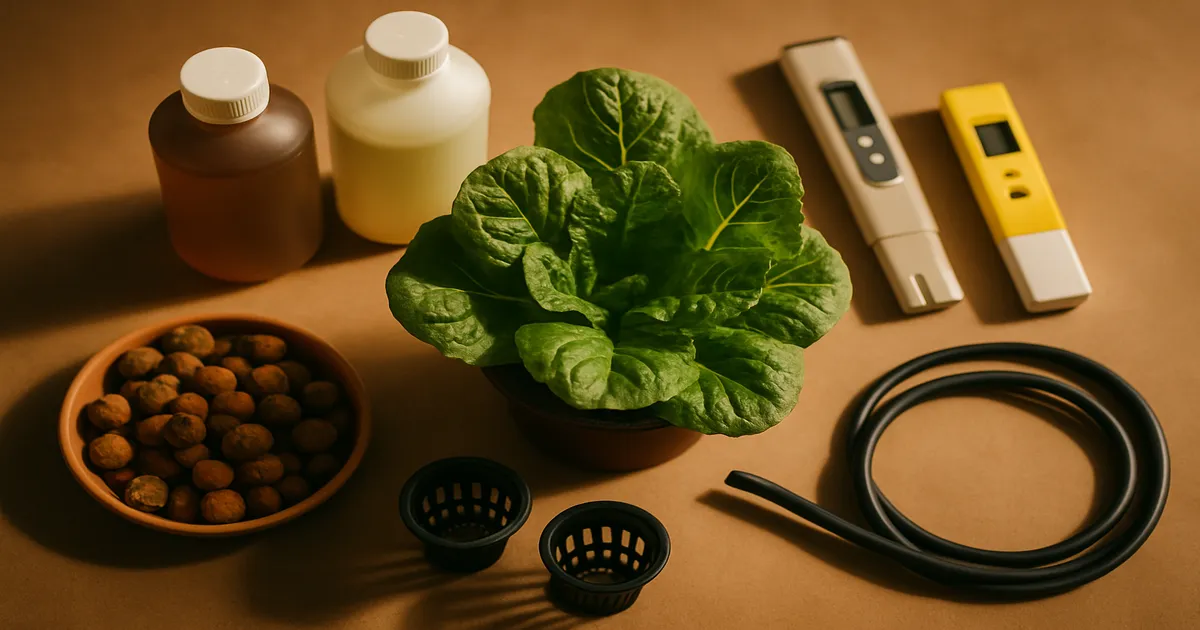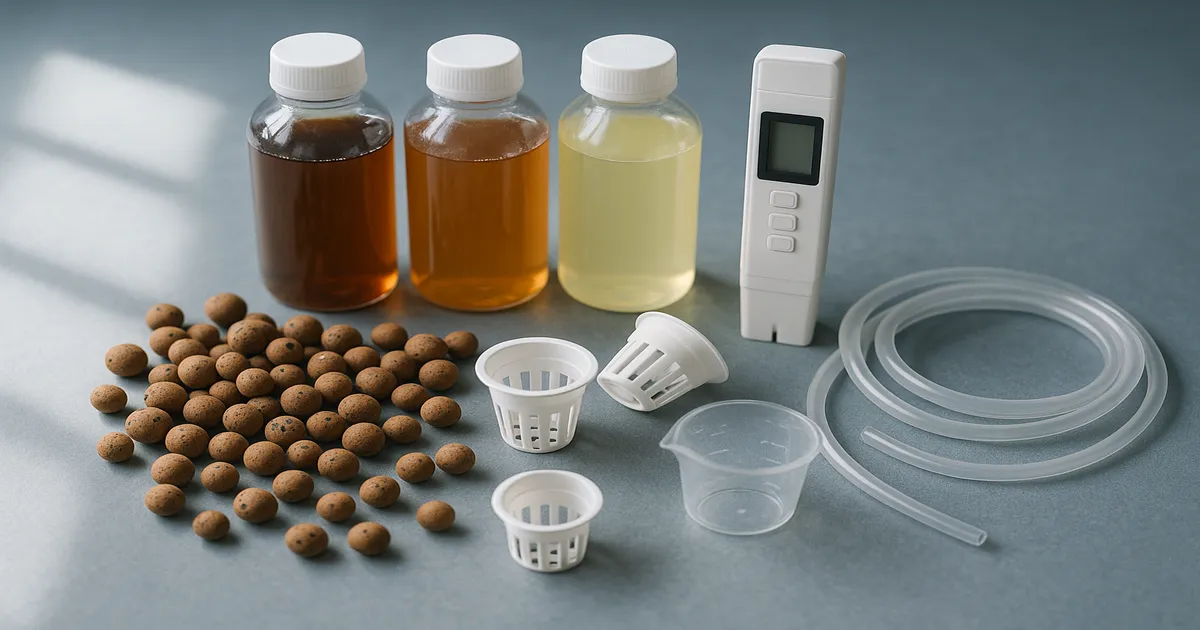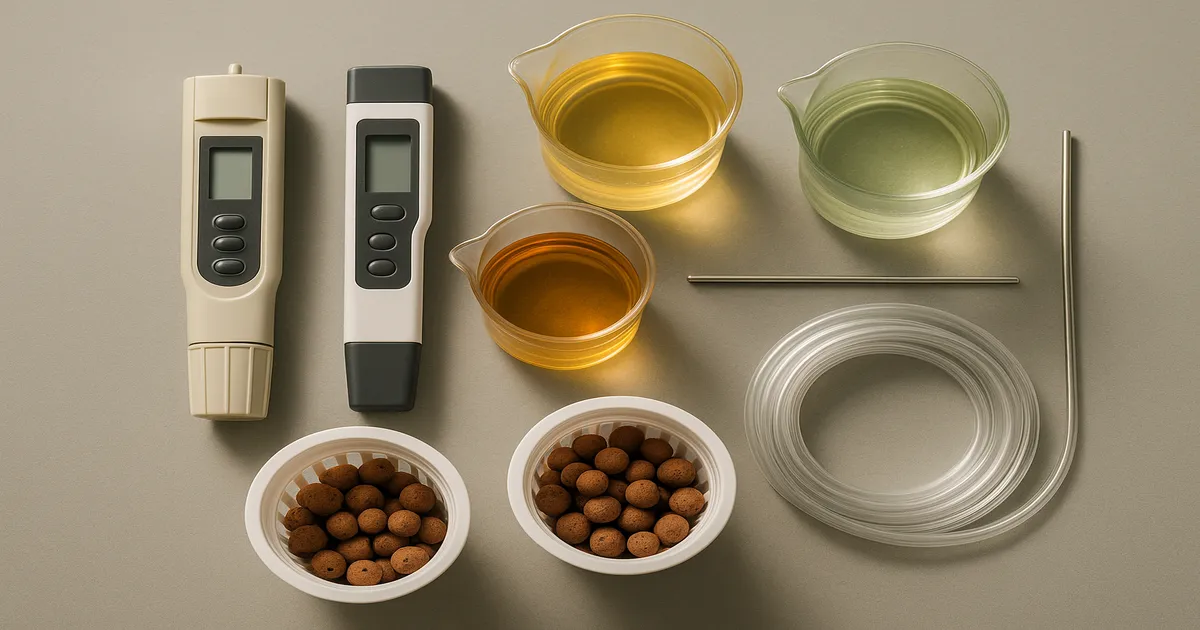

Quick Answer: When you should add nutrients depends on your growing medium and your plant’s stage. In soil, hold off for the first 2–3 weeks — the mix already has what seedlings need. In hydroponics or coco coir, start at ¼ strength (100–250 PPM / 0.2–0.5 EC) from day one. Add nutrients too early and you’ll burn roots; wait too long and you’ll starve your plants.
Figuring out when to add nutrients is one of the most common questions new growers ask — and one of the most consequential to get right. The answer isn’t a single date on a calendar. It’s three overlapping decisions: what growth stage your plant is in, what your reservoir or soil needs right now, and what your EC and pH readings (or your plant’s leaves) are telling you. Get all three right and your plants thrive. Miss one and you’re chasing problems instead of growing food.
When Should You Add Nutrients? The Three Decisions Every Grower Faces
- Developmental timing — matching your nutrient formula and concentration to your plant’s current growth stage (seedling, veg, flower, flush).
- Reservoir and solution management — knowing when to top off, when to add half-strength solution, and when to do a full reservoir change.
- Reactive timing — responding to EC/pH drift, visual deficiency symptoms, or unexpected changes in plant behavior.
Most grower mistakes happen in category one. The instinct to “give plants more food” is strong, but seedlings have tiny, sensitive root systems that can’t handle full-strength nutrients. Hydro and coco growers should start at ¼ strength. Soil growers should wait 2–3 weeks entirely.
Timing by Medium at a Glance
| Medium | Seedling | Vegetative | Flowering | Flush |
|---|---|---|---|---|
| Soil | No added nutrients (weeks 1–3) | Start liquid feed weeks 3–4 | Shift to bloom formula | Stop feeding 1 week before harvest |
| Coco Coir | ¼ strength from day one | Ramp to 800–1,400 PPM (1.6–2.8 EC) | 1,000–1,800 PPM (2.0–3.6 EC) | Light final feed or plain water |
| Hydroponics | 100–250 PPM (0.2–0.5 EC) | 800–1,400 PPM (1.6–2.8 EC) | 1,000–1,800 PPM (2.0–3.6 EC) | Plain water flush 1–2 weeks out |
When to Add Nutrients by Growth Stage
Seedling Stage (Days 1–14): Less Is More
Young seedlings run on stored energy from the seed itself. Their root systems are fragile and have very little surface area to buffer against excess salts. In soil, a quality seed-starting mix already contains enough nutrients to carry a seedling for two to three weeks — adding more is asking for trouble.
In hydroponics and coco, you can’t rely on the medium to supply anything, so you do need to feed from the start. Keep it gentle: 100–250 PPM (0.2–0.5 EC), with a slight emphasis on phosphorus for root development and minimal nitrogen. pH should sit at 5.8–6.2 for hydro and coco, and 6.0–6.5 for soil.
Vegetative Stage (Weeks 2–5+): Ramping Up Nitrogen
Once your plant has established roots and is pushing new leaves regularly, it’s time to increase feeding. This is the nitrogen-hungry phase. In hydro and coco, work your way up to 800–1,400 PPM (1.6–2.8 EC). In soil, start liquid feeding every 7–14 days around weeks 3–4, once the starter nutrients in the mix are depleted.
Your NPK ratio should be nitrogen-dominant at this stage — something like 3-1-2 or 4-2-3 works well for most crops. Calcium and magnesium also become increasingly important as canopy size grows, especially if you’re using RO water or growing in coco, where CalMag supplementation is essentially mandatory.
Flowering and Fruiting Stage: Shift to Phosphorus and Potassium
When your plant transitions to flowering, the nutrient profile flips. Nitrogen drops; phosphorus and potassium climb. A low-N, high-P/K ratio like 1-3-2 or 0-5-4 during peak bloom suits most fruiting crops. EC targets rise to 1,000–1,800 PPM (2.0–3.6 EC) in hydro.
Calcium and magnesium remain critical here — they’re essential for cell wall integrity during fruit development. Skimping on calcium during fruiting is a fast track to blossom end rot in tomatoes and peppers. Micronutrients like iron, boron, and zinc also matter more than ever during fruit set.
Late Flowering and Pre-Harvest Flush
In hydro systems, most growers run plain water for the final 1–2 weeks before harvest, dropping EC close to zero. The goal is to clear residual salt buildup from plant tissue, which many growers believe improves final flavor and quality.
In soil, the approach is simpler: stop feeding 7–10 days before harvest and let the plant use up what’s already in the medium. Coco sits somewhere in the middle. Because coco has almost no buffering capacity, plants can show stress quickly on plain water alone, so some growers prefer a light final feed rather than switching to pure water.
When to Add Nutrients by System Type
Deep Water Culture (DWC): Daily Monitoring Is Non-Negotiable
In DWC, roots are suspended directly in nutrient solution 24/7. There’s no medium to buffer anything, which means EC and pH can swing fast — especially in warm weather. Check both daily. Nutrients should always be present in the reservoir; the question is how much, not whether. Aim to keep water temperature between 65–72°F (18–22°C) to prevent root rot and maintain oxygen levels.
NFT and Aeroponics: High Sensitivity, Precise Timing
Both systems deliver nutrients in very thin films or fine mists with minimal root-zone buffering. Small EC or pH errors hit plants quickly. Stick tightly to your target ranges and check your solution at least once daily. These systems reward precision.
Ebb and Flow and Drip Systems: Pulse Feeding and Runoff Management
Timing in these systems is tied to your flood or drip cycles. The key risk is salt accumulation between cycles. Watch your runoff EC — if it’s significantly higher than your input EC, you have buildup that needs flushing. Change your reservoir on a regular schedule (every 7–10 days) and don’t let runoff recirculate indefinitely.
Kratky Method: Set, Top Off, and Monitor
Kratky is the most forgiving passive system. You mix your nutrient solution once at the correct strength, then top off as the level drops. The catch is that your initial mix has to be accurate — there’s no pump or recirculation to distribute nutrients evenly. Use a reliable EC meter and mix carefully. When topping off, use plain water if EC is stable or rising, and half-strength solution if EC is dropping alongside the water level.
Coco Coir: Feed from Day One
Coco behaves like a hydroponic medium, not soil. It has almost no native nutrients and a natural tendency to bind calcium and magnesium. Feed from the day of transplant at ¼ strength, always include CalMag, and water to runoff at every feeding to prevent salt buildup. Treat your coco pH like hydro: 5.8–6.3.
Soil: Let the Medium Buffer for You
Soil’s built-in buffering capacity is its biggest advantage. A quality potting mix can sustain a seedling for weeks without any input from you. Once you do start feeding (weeks 3–4), less frequent applications work fine — every 7–14 days is typical for liquid nutrients. Organic amendments like worm castings or compost release even more slowly, making them very forgiving for beginners.
Essential Nutrients: What to Add and Why
Plants need 17 essential nutrients to complete their life cycle. In hydroponic systems, you’re responsible for supplying all of them — which is why a quality complete nutrient line matters. They break into three groups: macronutrients (N, P, K), secondary nutrients (Ca, Mg, S), and micronutrients (Fe, Mn, Zn, B, Cu, Mo, Cl).
Macronutrient and Secondary Nutrient Roles
| Nutrient | Role | Deficiency Sign |
|---|---|---|
| Nitrogen (N) | Vegetative growth, chlorophyll production | Yellowing of older/lower leaves |
| Phosphorus (P) | Root development, flowering, energy transfer | Purple/red stems, dark green leaves |
| Potassium (K) | Water regulation, fruit quality, disease resistance | Brown leaf edges, weak stems |
| Calcium (Ca) | Cell wall strength, root tip health | Tip burn, blossom end rot |
| Magnesium (Mg) | Chlorophyll synthesis, enzyme activation | Interveinal chlorosis on older leaves |
| Sulfur (S) | Protein synthesis, enzyme function | Yellowing of new growth |
Micronutrients: Small Amounts, Big Consequences
Micronutrients are needed in tiny amounts but are not optional. Iron is the most commonly deficient micronutrient in hydro systems and becomes unavailable above pH 6.5. Boron matters most during flowering for pollen viability and fruit set. Manganese and zinc affect new growth most visibly.
| Nutrient | Role | Notes |
|---|---|---|
| Iron (Fe) | Chlorophyll synthesis | Most common micro deficiency; pH-sensitive |
| Manganese (Mn) | Photosynthesis, enzyme activation | Interveinal chlorosis on new growth |
| Zinc (Zn) | Hormone production, enzyme function | Stunted new growth |
| Boron (B) | Cell division, pollen viability | Hollow stems, poor fruit set |
| Copper (Cu) | Lignin synthesis, enzyme function | Rare; bluish-green discoloration |
| Molybdenum (Mo) | Nitrogen metabolism | Very rare deficiency |
| Chlorine (Cl) | Osmosis, photosynthesis | Almost never deficient |
Popular Nutrient Lines and Starter Recipes
The General Hydroponics Flora Series is a three-part system that lets you dial in custom NPK ratios for any stage. It’s one of the most widely used lines for good reason — flexible, proven, and available almost everywhere.
Jack’s 321 is a dry formula that’s become extremely popular for its simplicity and cost-effectiveness. The standard mix — 3.6 g Part A + 2.4 g Part B + 1.1 g Epsom salt per gallon — yields roughly 1,000–1,200 PPM (2.0–2.4 EC). Masterblend 4-18-38 is another dry option beloved by tomato growers: 2.4 g Masterblend + 2.4 g calcium nitrate + 1.2 g Epsom salt per gallon yields around 800–1,000 PPM (1.6–2.0 EC). For growers who want less daily pH adjustment, Advanced Nutrients pH Perfect uses built-in pH buffering technology that many DWC growers swear by.
A general-purpose vegetative mix targets 1,200–1,400 PPM (2.4–2.8 EC) with 5 ml/gallon of CalMag added — especially important if you’re on RO water or growing in coco. A bloom mix runs 1,400–1,800 PPM (2.8–3.6 EC) with a PK booster added at weeks 3–5 of flowering.
pH and EC: The Two Metrics That Tell You When to Add Nutrients
Why pH Determines Whether Nutrients Are Actually Available
You can mix a perfect nutrient solution and still starve your plants if the pH is wrong. pH controls which ionic forms nutrients exist in, and many of those forms simply can’t be absorbed by roots outside a narrow range. This is called nutrient lockout — it looks exactly like a deficiency even though your reservoir is full of nutrients.
Optimal pH Ranges by Growing Medium
- Hydroponics (DWC, NFT, Aeroponics): pH 5.8–6.2 sweet spot (acceptable range 5.5–6.5)
- Coco Coir: pH 5.8–6.3
- Soil: pH 6.2–6.8
- Rockwool: pH 5.5–6.0 (slightly lower due to the medium’s natural alkalinity)
How to Monitor and Adjust pH Correctly
A quality digital pH meter is non-negotiable. The Apera PC60 and the Bluelab pH Pen are both reliable choices — calibrate weekly with 4.0 and 7.0 buffer solutions. pH strips are fine for rough checks but not for serious growing.
When adjusting pH:
- Mix all nutrients into your water first.
- Wait 5 minutes for the solution to stabilize.
- Add pH Down (phosphoric acid) or pH Up (potassium hydroxide) in small increments — 0.5–1 ml per 5 gallons at a time.
- Wait another 15–30 minutes, then take a final reading before using the solution.
A deliberate pH swing between 5.8 and 6.2 across your feeding cycle is actually beneficial in hydro. Different nutrients become most available at different points in that range, so letting pH drift slightly before correcting it ensures broader nutrient uptake.
Reading EC to Know When to Top Off vs. Change the Reservoir
EC tells you how concentrated your solution is — not which specific nutrients are present, but how much total dissolved material. Here’s how to read it:
- Water level drops, EC stays stable or rises → Top off with plain water. Plants are drinking faster than they’re feeding.
- Water level drops AND EC drops → Top off with half-strength solution. Plants are feeding and drinking together.
- EC rising unexpectedly → Reduce nutrient concentration; check for heat stress or root issues causing reduced uptake.
- Full reservoir change: Every 7–10 days in active hydro systems. Don’t let it go beyond 14 days — salt buildup and pathogen risk both climb fast.
EC Targets by Crop Type
| Crop | Seedling PPM (EC) | Vegetative PPM (EC) | Flowering/Fruiting PPM (EC) |
|---|---|---|---|
| Lettuce / Leafy Greens | 100–250 (0.2–0.5) | 560–840 (1.1–1.7) | 840–1,120 (1.7–2.2) |
| Herbs | 100–250 (0.2–0.5) | 700–1,120 (1.4–2.2) | 1,120–1,400 (2.2–2.8) |
| Tomatoes | 200–400 (0.4–0.8) | 1,400–2,100 (2.8–4.2) | 2,100–3,500 (4.2–7.0) |
| Cucumbers | 200–400 (0.4–0.8) | 1,190–1,750 (2.4–3.5) | 1,750–2,450 (3.5–4.9) |
| Strawberries | 100–300 (0.2–0.6) | 700–1,260 (1.4–2.5) | 1,260–1,750 (2.5–3.5) |
| Cannabis | 200–400 (0.4–0.8) | 800–1,400 (1.6–2.8) | 1,000–1,800 (2.0–3.6) |
How Light Intensity Affects When to Add Nutrients
Light is the engine that drives photosynthesis, and photosynthesis drives nutrient demand. A plant under a powerful LED at 800 µmol/m²/s will consume nutrients significantly faster than the same plant under a weak grow light at 200 µmol/m²/s. If you’re running low-intensity lighting and feeding at high-intensity rates, you will get salt buildup and lockout.
Match your feed concentration to your actual light output. Lettuce growing under a Mars Hydro TS 1000 at 200 µmol/m²/s doesn’t need the same EC as tomatoes running under an HLG 650R at 800 µmol/m²/s. Use the DLI targets below as a guide, and scale your nutrient concentration up or down accordingly.
| Crop | Stage | PPFD (µmol/m²/s) | DLI (mol/m²/day) |
|---|---|---|---|
| Lettuce / Leafy Greens | All | 150–250 | 12–17 |
| Herbs | All | 200–400 | 14–20 |
| Tomatoes | Vegetative | 400–600 | 20–30 |
| Tomatoes | Flowering | 600–1,000 | 25–40 |
| Cannabis | Vegetative | 400–600 | 20–30 |
| Cannabis | Flowering | 600–1,000 | 35–65 |
Frequently Asked Questions: When Should I Add Nutrients?
Can I add nutrients every time I water? In hydroponics, yes — nutrients are always present in the solution. In soil, feeding every watering is usually too much. Most soil growers feed every second or third watering, or every 7–14 days with liquid nutrients, and water plain between feeds.
What happens if I add nutrients too early? Seedlings exposed to full-strength nutrients suffer fertilizer burn — roots are damaged, tips turn brown, and growth stalls. In soil, early feeding can also disrupt the microbial ecosystem in your potting mix. Start low and ramp up gradually.
How do I know when my soil nutrients are depleted? Watch for pale or yellowing lower leaves, slowed growth, and smaller-than-expected new leaves. You can also test your soil’s EC with a runoff test: water thoroughly, collect the runoff, and measure EC. A reading below 0.8–1.0 EC suggests the medium is running low.
Should I add nutrients when I transplant? In hydro and coco, yes — transplant into your standard ¼-strength solution. In soil, hold off for at least a week after transplanting. The plant is under stress and needs time to establish new roots before it can handle feeding.
Do I need to add nutrients if I’m using organic soil? A premium organic mix with compost, worm castings, and slow-release amendments can feed plants for 4–6 weeks without any additional input. After that, a gentle liquid organic feed — fish emulsion, kelp meal tea, or a balanced organic liquid fertilizer — every 10–14 days is usually sufficient.