
Quick Answer: Yes, hydroponic devices genuinely work — NASA has relied on the underlying science since the 1980s, and a global market approaching $21 billion doesn’t sustain itself on broken promises. Most failures trace back to user error: unmanaged pH, weak lighting, or expecting a countertop herb garden to perform like a greenhouse. Get the setup right, and you’ll grow faster while using far less water than soil ever allowed.
Does This Hydroponic Device Work? The Honest Answer
What Skeptical Buyers Need to Know
Hydroponic devices work. That’s not marketing spin — it’s validated by decades of NASA research into space food production and confirmed by a market that doesn’t sustain billions in annual sales on broken promises. The technology is sound. What varies dramatically is how well any individual grower sets up and manages their system.
A hydroponic device “works” when it delivers faster growth, healthier plants, and reliable yields compared to a pot of soil. In optimized systems, plants grow 30–50% faster because roots access nutrients directly rather than searching through soil. Water usage drops 70–90% compared to conventional gardening.
The honest caveat: “optimized” is doing a lot of work in that sentence. Optimization requires managing pH, EC, lighting, and temperature — none of which happen automatically in most consumer devices.
When Hydroponic Devices Fail — and Why
Most failures trace back to three causes:
- Unmanaged pH drift — nutrient lockout kicks in outside pH 5.5–6.5, starving plants even when nutrients are present
- Insufficient lighting — compact smart devices often can’t deliver enough intensity for fruiting crops
- Unrealistic expectations — marketing photos show lush tomato plants; reality is that most countertop devices are built for herbs and lettuce
The device usually isn’t broken. The setup needs attention.
Types of Hydroponic Devices Explained
Deep Water Culture (DWC): Simple and Effective
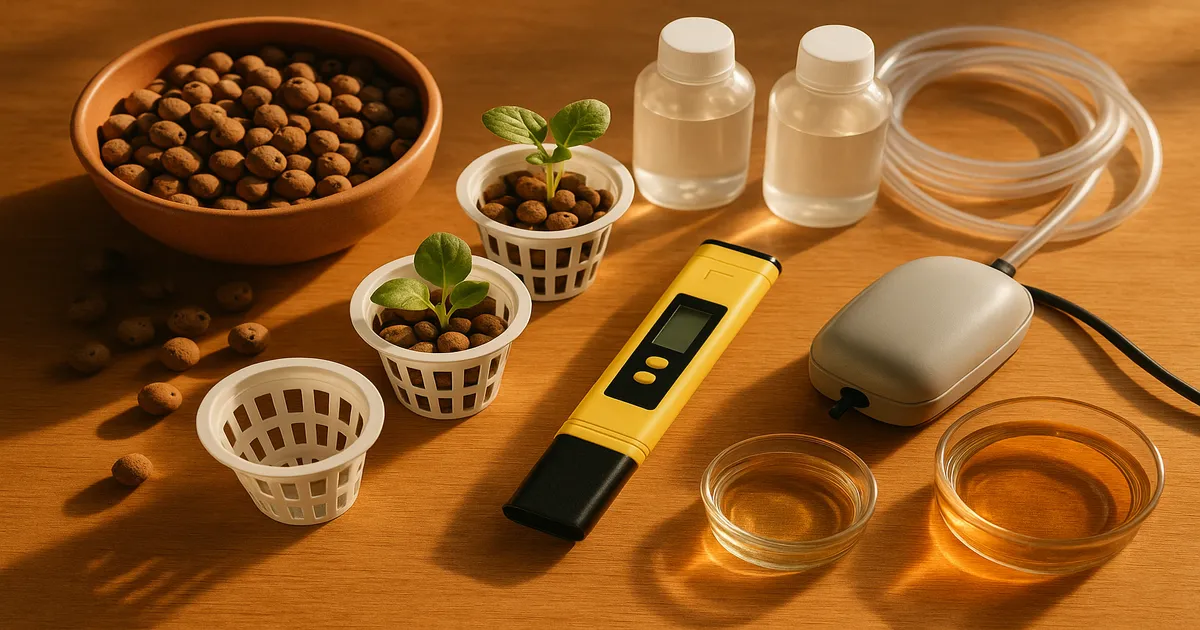
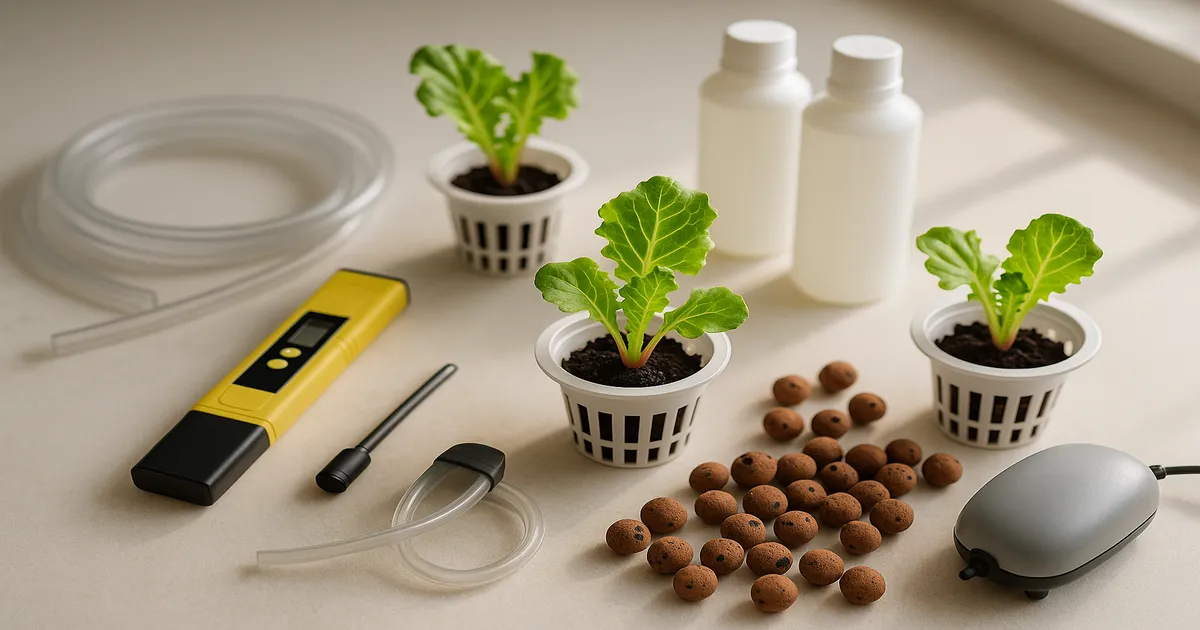
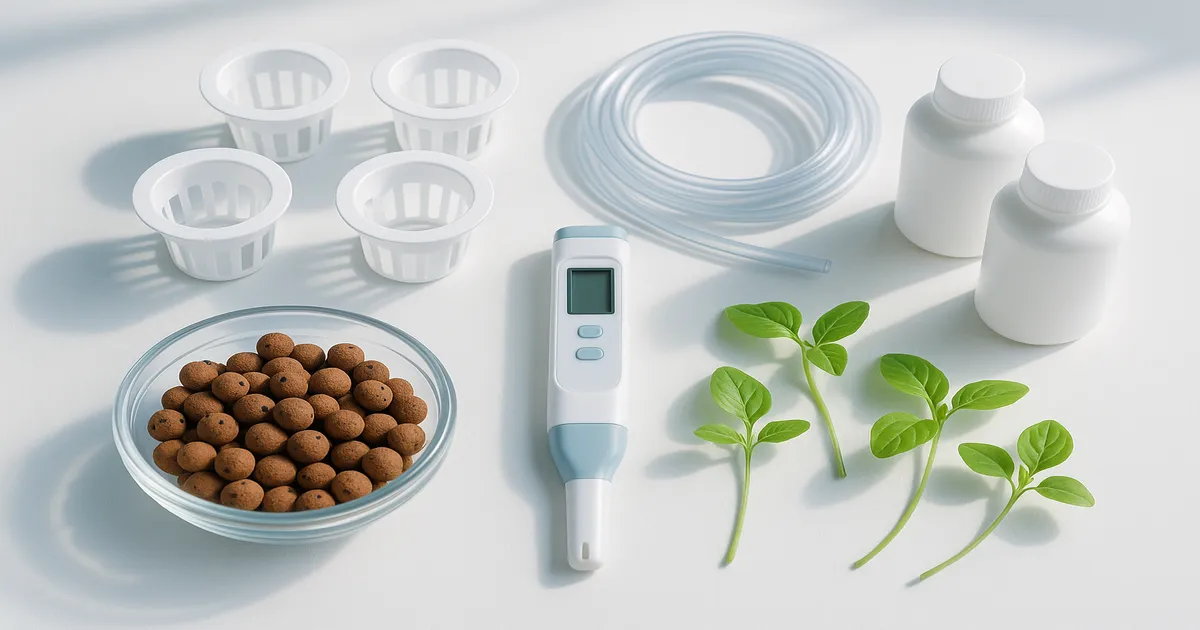
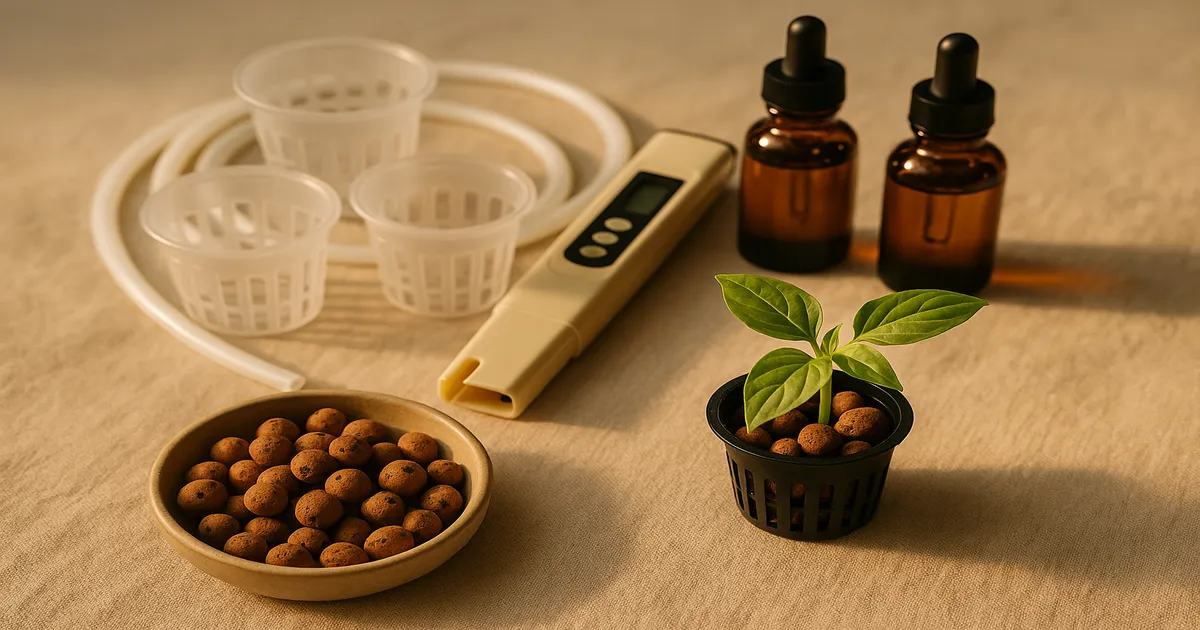
DWC suspends plant roots directly in an oxygenated, nutrient-rich reservoir. An air pump keeps dissolved oxygen high, which roots love. It’s one of the most forgiving systems for beginners and works exceptionally well for lettuce, basil, and other leafy crops. A basic air pump and airstone — such as the Vivosun Commercial Air Pump — is all you need to get started.
NFT, Aeroponics, and Ebb & Flow Systems
NFT (Nutrient Film Technique) runs a thin, continuous stream of nutrient solution over exposed roots in sloped channels. It’s efficient and popular for commercial leafy green production, but pump failures can kill plants within hours — reliability matters here.
Aeroponics mists roots with nutrient solution, delivering exceptional oxygenation and the fastest growth rates of any system. The tradeoff is complexity and sensitivity to equipment failure. Ebb & Flow periodically floods a grow tray, then drains — versatile enough to handle most crop types and forgiving enough for intermediate growers.
Passive Systems: Kratky and Wicking
The Kratky method is hydroponics at its simplest: a sealed jar, nutrient solution, and a net pot. No pump, no electricity. As the plant drinks, an air gap forms above the solution, providing oxygen to roots. It works beautifully for herbs and lettuce, costs almost nothing, and requires minimal maintenance.
Wicking systems use an absorbent medium — rope or felt — to draw nutrient solution up to roots by capillary action. They’re even simpler than Kratky but limited to small, low-demand plants.
Smart Pod Devices: AeroGarden, Click & Grow, IDOO, and More
These all-in-one units combine a reservoir, pump, built-in LED light, and pre-seeded pods into a single countertop appliance. They’re designed for zero technical knowledge — plug in, add water and nutrients, and grow. For herbs and lettuce, they genuinely deliver. For fruiting crops, their lighting limitations become a real constraint.
Which System Is Right for You?
| System | Complexity | Best Crops | Starting Cost |
|---|---|---|---|
| Smart Pod (AeroGarden, IDOO) | Very Low | Herbs, lettuce | $50–$250 |
| Kratky Jar | Very Low | Herbs, lettuce | $5–$20 |
| DWC Bucket | Low–Medium | Lettuce, herbs, cannabis | $30–$100 |
| NFT Channel | Medium | Leafy greens, strawberries | $100–$400 |
| Ebb & Flow | Medium | Most crops | $100–$300 |
| Aeroponics | High | Fast crops, microgreens | $200–$800+ |
Real-World Performance: What These Devices Actually Deliver
Hydroponics consistently outperforms soil for speed and consistency indoors. Lettuce that takes 60–70 days in garden soil can reach harvest in 30–40 days in a well-managed DWC system. Basil grows so aggressively in some setups that weekly harvesting becomes necessary.
The 70–90% water savings figure isn’t marketing fluff — it’s a structural advantage. Hydroponic systems recirculate solution rather than letting it drain away or evaporate from open soil. For apartment growers or anyone in water-restricted regions, this genuinely matters.
Here’s where honesty is essential. The lush tomato plants on AeroGarden’s packaging? Achievable — but not with the base unit’s 20W light alone. Most compact smart devices excel at herbs and lettuce. They struggle with anything that needs high light intensity or extended vertical growth.
Device-by-Device Performance Breakdown
| Device | Built-in Light | Max PPFD | Best For | Verdict |
|---|---|---|---|---|
| AeroGarden Harvest | 20W LED | 150–200 μmol/m²/s | Herbs, lettuce | ✅ Works well for herbs |
| AeroGarden Farm 24XL | 60W LED | 250–350 μmol/m²/s | Herbs, lettuce, small tomatoes | ✅ Good for leafy crops |
| Click & Grow Smart Garden 9 | 24W LED | 100–150 μmol/m²/s | Herbs, microgreens | ⚠️ Limited intensity |
| Lettuce Grow Farmstand | None | Requires supplemental | Outdoors or with add-on light | ⚠️ Needs light kit |
| Tower Garden HOME | None | Requires supplemental | Outdoors or greenhouse | ⚠️ Needs light kit |
| IDOO 12-pod | 23W LED | 150–200 μmol/m²/s | Herbs, lettuce | ✅ Works for herbs |
Nutrient Management: The Foundation of Success
Why Nutrients Matter More Here Than in Soil
Soil has buffering capacity — organic matter, microbial life, and minerals that catch and correct imbalances over time. Hydroponics has none of that. Your nutrient solution is the soil, and whatever you put in (or forget to put in) shows up in your plants within days.
Plants need 17 essential nutrients. Carbon, hydrogen, and oxygen come from air and water. The remaining 14 must come from your nutrient solution, which is why a complete, balanced formula matters enormously.
N-P-K ratios by growth stage:
- Vegetative phase: Higher nitrogen — aim for an N:P:K ratio around 3:1:2
- Flowering/fruiting phase: Reduce nitrogen, increase phosphorus and potassium
Secondary nutrients to watch:
- Calcium (target: 150–200 PPM) — deficiency causes tip burn in lettuce and blossom end rot in tomatoes
- Magnesium (target: 50–75 PPM) — the central atom in chlorophyll; deficiency causes interveinal yellowing
- Sulfur (target: 50–100 PPM) — supports enzyme function and protein synthesis
Iron, manganese, zinc, boron, copper, and molybdenum are all needed in trace amounts. A quality pre-mixed formula includes them automatically.
Beginner Nutrient Recipes
For beginners: The General Hydroponics Flora Series is the industry standard. It’s a three-part system (Grow/Micro/Bloom) adjusted by growth stage:
- Vegetative: 5ml Grow + 5ml Micro + 2ml Bloom per gallon → 800–1200 PPM (1.6–2.4 EC)
- Flowering: 2ml Grow + 5ml Micro + 8ml Bloom per gallon
For intermediate growers: Masterblend 4-18-38 costs roughly $0.05–0.10 per gallon and is used by commercial operations worldwide. Mix 2.4g Masterblend + 2.4g Calcium Nitrate + 1.2g Epsom Salt per gallon, targeting 800–1000 PPM (1.6–2.0 EC) for leafy greens.
Pre-formulated smart device nutrients run 500–800 PPM (1.0–1.6 EC) — fine for herbs and lettuce, but they won’t push fruiting crops to their potential.
Does This Hydroponic Device Work? pH and EC Are the Real Answer
pH: The Number One Cause of Failure
Outside pH 5.5–6.5, nutrients lock out of plant roots even when the solution looks perfect. Iron becomes unavailable below pH 5.5. Calcium and magnesium become unavailable above pH 6.5. Plants starve while sitting in a full reservoir — and growers assume the device is broken.
Ideal pH ranges by crop:
- Herbs and leafy greens: pH 5.8–6.2
- Fruiting plants (tomatoes, peppers): pH 6.0–6.5
- Strawberries: pH 5.8–6.2
- Cannabis: pH 5.8–6.0
Digital meters are the only reliable choice for regular growing. The Apera PH20 or Bluelab pH Pen ($40–$80) are solid starting points. pH strips cost $5–$15 but carry ±0.5 pH error margins — fine for a rough check, not for dialing in a system. Calibrate your meter weekly using pH 4.0 and pH 7.0 buffer solutions.
EC and PPM: What the Numbers Mean
EC (electrical conductivity) measures total dissolved nutrient concentration. PPM is EC converted to a number, but two conversion scales exist:
- 500 scale (Hanna, Milwaukee meters): 1.0 EC = 500 PPM
- 700 scale (Bluelab Truncheon): 1.0 EC = 700 PPM
Always confirm which scale your meter uses before comparing readings. For a budget option, the TDS-3 digital meter ($10–$15) works fine for beginners.
| Growth Stage | PPM (500 scale) | EC |
|---|---|---|
| Seedling / Clone | 100–400 | 0.2–0.8 |
| Early Vegetative | 400–800 | 0.8–1.6 |
| Late Vegetative | 800–1200 | 1.6–2.4 |
| Early Flowering | 1000–1400 | 2.0–2.8 |
| Late Flowering / Fruiting | 1200–1800 | 2.4–3.6 |
Adjusting pH safely:
- Too low: Add pH Up (potassium hydroxide) in 0.5–1ml increments per gallon. Mix thoroughly, retest after 15 minutes.
- Too high: Add pH Down (phosphoric acid) using the same incremental approach.
Never dump large amounts in at once. Small adjustments, then patience.
Common problems and fixes:
| Problem | Likely Cause | Fix |
|---|---|---|
| pH rising overnight | Plants consuming acidic nutrients | Add pH Down; monitor more frequently |
| pH crashing suddenly | Algae bloom or microbial activity | Clean reservoir; add beneficial bacteria |
| EC rising over time | Water evaporating, concentrating nutrients | Top off with plain pH-adjusted water |
| EC dropping fast | Heavy nutrient uptake | Add fresh nutrient solution |
Larger reservoirs (5+ gallons) buffer pH swings far better than the 1–2 gallon tanks in most smart devices — a genuine structural limitation of compact units. Change your reservoir completely every 7–14 days to prevent salt buildup. Adding beneficial bacteria like Botanicare Hydroguard stabilizes the root zone and suppresses pathogens that cause pH crashes.
Lighting: Why Many Hydroponic Devices Underperform Indoors
PPFD, DLI, and PAR — Simply Explained
- PAR: The 400–700nm light spectrum plants use for photosynthesis
- PPFD: How much of that light hits the canopy per second — measured in μmol/m²/s
- DLI: Total light delivered per day — PPFD × hours × 0.0036
Think of PPFD as the flow rate of a hose and DLI as how full the bucket gets by end of day.
| Crop | PPFD Target | DLI Target | Photoperiod |
|---|---|---|---|
| Microgreens | 100–300 μmol/m²/s | 6–12 mol/m²/day | 12–16 hours |
| Herbs / Leafy greens | 200–400 μmol/m²/s | 12–17 mol/m²/day | 16–18 hours |
| Fruiting vegetables | 400–800 μmol/m²/s | 20–30 mol/m²/day | 18–20 hours |
| Strawberries | 300–500 μmol/m²/s | 17–22 mol/m²/day | 16–18 hours |
For herbs and lettuce, most smart devices manage — barely. The AeroGarden Harvest’s 20W LED delivers 150–200 μmol/m²/s, covering the lower end of leafy green requirements at 16–18 hours per day. For fruiting crops, no compact device on the market delivers the 400–800 μmol/m²/s those plants need.
If your plants are stretching toward the light, growing pale, or producing small leaves, those are signs of light stress. Plan for a dedicated grow light.
Recommended LED grow lights:
- Budget ($50–$150): Mars Hydro TS-600 — 100W, 2×2 ft coverage, ~400–600 μmol/m²/s at 18 inches
- Mid-range ($150–$400): Spider Farmer SF-2000 — 200W, 4×4 ft coverage, well-suited for fruiting crops
- Professional ($400+): Gavita Pro 1700e LED — 645W, commercial-grade output exceeding 1500 μmol/m²/s
Photoperiod guidelines:
- Herbs and leafy greens: 16–18 hours light / 6–8 hours dark
- Fruiting crops: 18–20 hours light / 4–6 hours dark
- Strawberries: 16–18 hours light / 6–8 hours dark
A basic outlet timer costs under $10 and removes all guesswork for standalone systems.
Troubleshooting: Why Your Hydroponic Device Seems Not to Work
Quick Diagnosis Guide
Yellowing leaves almost always point to a pH problem causing nutrient lockout, or a specific deficiency — check pH first, then EC. If pH is correct and EC is in range, look at calcium and magnesium levels.
Slow or stunted growth usually means insufficient light, low nutrient concentration, or water temperature above 72°F (22°C), which reduces dissolved oxygen and invites root rot.
Brown, slimy roots indicate root rot, typically caused by warm water, low oxygen, or light leaking into the reservoir. Lower water temperature to 65–68°F (18–20°C), increase aeration, and treat with Hydroguard.
Wilting despite full reservoir is often a sign of root rot or oxygen deprivation — not dehydration. Adding more water makes it worse. Address the root zone first.
FAQ: Does This Hydroponic Device Work?
Q: Do hydroponic devices actually work for beginners with no experience? Yes. Passive systems like Kratky and smart pod devices like AeroGarden require almost no technical knowledge. Start with herbs or lettuce, follow the nutrient instructions, and check pH weekly. Most beginners see their first harvest within 4–6 weeks.
Q: Why are my plants dying in my hydroponic system? The most common causes are pH outside the 5.5–6.5 range, root rot from warm or poorly oxygenated water, or nutrient deficiency from an incomplete formula. Check pH and water temperature first — those two factors account for the majority of failures.
Q: Can I grow tomatoes in a countertop hydroponic device? Technically yes, but practically difficult. Most countertop devices lack the light intensity (400–800 μmol/m²/s) that tomatoes need to fruit well. Compact cherry tomato varieties in an AeroGarden Farm 24XL are the most realistic option. For full-sized tomatoes, you’ll need a dedicated grow tent and a proper LED grow light.
Q: How often should I change the nutrient solution? Every 7–14 days for most systems. In small reservoirs (under 2 gallons), weekly changes prevent salt buildup and microbial imbalance. Always top off with plain pH-adjusted water between changes when EC rises due to evaporation.
Q: Are hydroponic nutrients safe for edible plants? Yes. Hydroponic nutrients are mineral salts — the same elements plants extract from soil. Plants don’t distinguish between a nutrient ion from soil and one from a hydroponic solution. Use a formula designed for edibles, follow the recommended dosage, and flush with plain water for the final week before harvest.