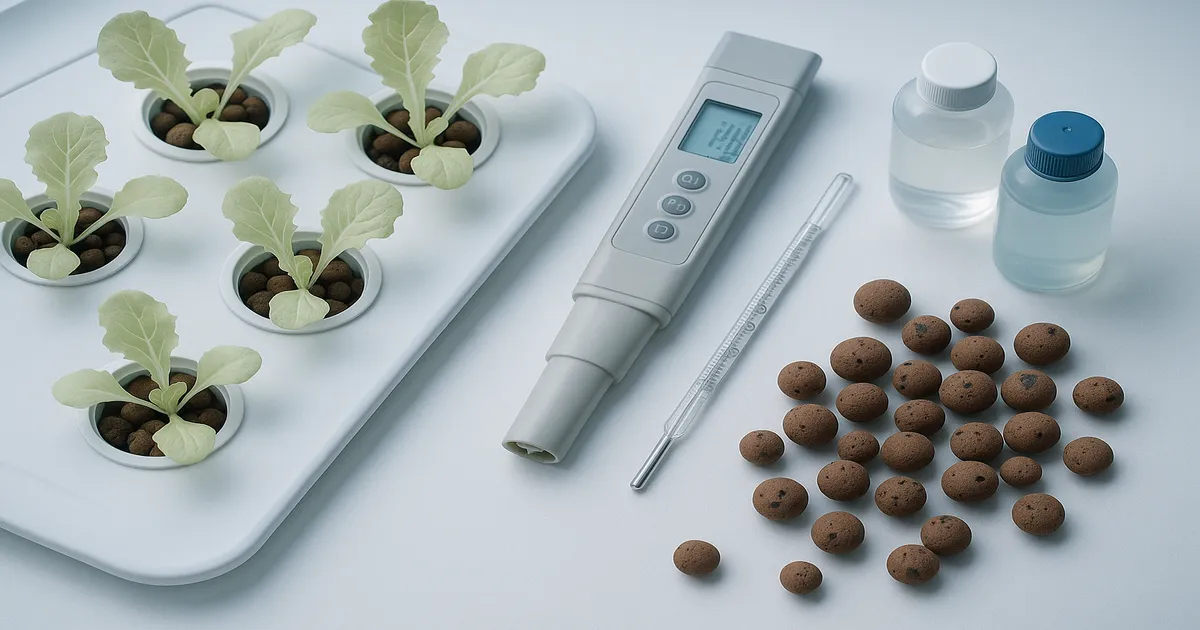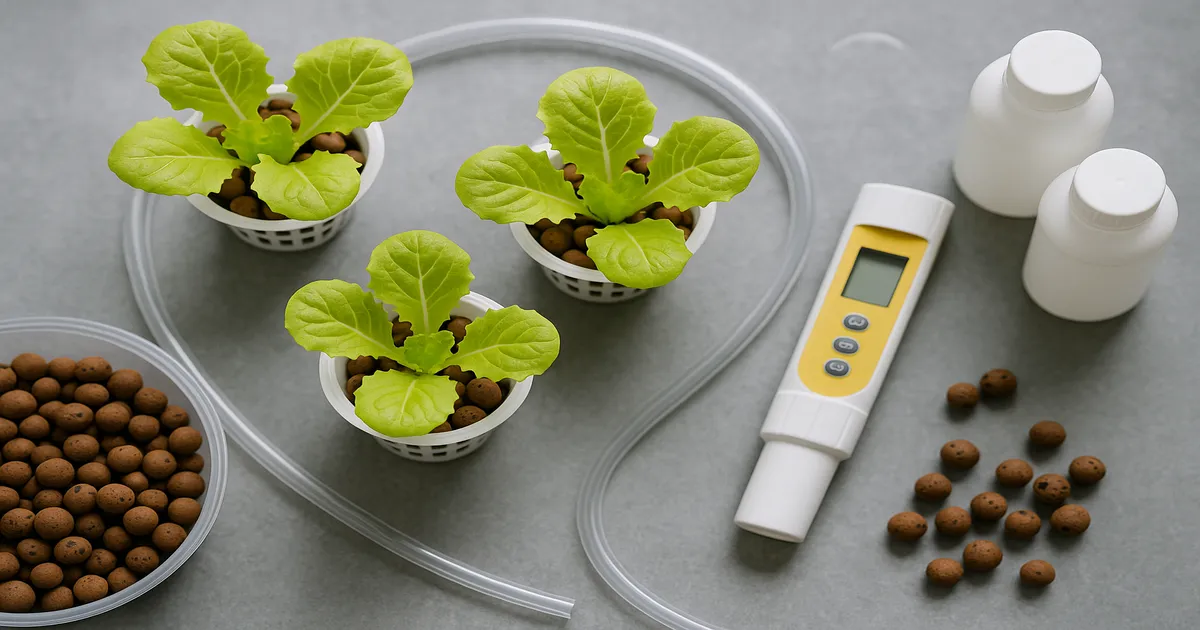

Quick Answer: If your lettuce is yellowing, wilting, showing brown leaf edges, or just looking sad, the culprit is almost always one of six things: nutrient deficiency, pH imbalance, lighting problems, pests, root issues, or environmental stress. Lettuce grows fast — 30 to 60 days from transplant to harvest — which means problems escalate quickly. Catch them early and you can usually save the crop.
So you’re staring at your plants and asking yourself: what is going on with my lettuce? Maybe the leaves are yellowing, the tips are browning, or the whole plant looks stunted and pale. The good news is that lettuce is one of the most responsive crops you can grow. Most problems have a clear cause and a straightforward fix — you just need to know where to look.
What Is Going On With My Lettuce? Start Here
Work through this checklist in order before reaching for nutrients or pesticides.
- Check the leaves. Yellowing old leaves → nitrogen or magnesium. Yellowing new leaves → iron or sulfur. Brown margins → calcium or potassium. Distorted growth → boron or zinc.
- Check your pH. Outside 5.8–6.2 (hydroponics) or 6.2–6.8 (soil)? Fix this first — everything else is secondary.
- Check your EC/PPM. Too low signals deficiency; too high signals toxicity or tip burn.
- Look at the roots. White and firm = healthy. Brown, slimy, and foul-smelling = root rot.
- Inspect for pests. Flip leaves over and look for insects, stippling, or webbing.
- Review your environment. Temperatures above 75°F (24°C), poor airflow, or weak light are all common culprits.
The Six Most Common Causes at a Glance
| Problem | Quick Sign |
|---|---|
| Nutrient deficiency | Patterned yellowing or browning |
| pH imbalance | Deficiency symptoms despite full reservoir |
| Lighting issues | Leggy growth or bleached leaves |
| Pest pressure | Irregular holes, stippling, webbing |
| Root rot | Brown slimy roots, wilting despite wet media |
| Environmental stress | Tip burn, bolting, bitter flavor |
Understanding Your Growing System
Lettuce has shallow roots and over 95% water content, making it unusually sensitive to system fluctuations. Knowing your setup narrows the diagnosis fast.
Deep Water Culture (DWC) and Kratky are beginner-friendly, but DWC punishes neglect. Low dissolved oxygen causes root rot, small reservoirs swing pH quickly, and any light leak triggers algae. Kratky removes the pump entirely, which is elegant — but the static solution depletes oxygen over time, especially when water temperatures climb above 72°F (22°C).
NFT systems rely on a continuous thin film of solution. If the pump fails even briefly, roots dry out within hours. Channeling — solution flowing unevenly down the channel — leads to patchy nutrient delivery. Keep a spare pump on hand and inspect channels regularly for blockages or biofilm buildup.
Soil and media beds bring their own challenges: overwatering, compaction, and pH drift from alkaline tap water. Aquaponics systems are forgiving on nutrients but require a balanced fish-to-plant ratio and careful pH management, since fish waste steadily pushes pH upward.
Vertical towers (such as Tower Garden) are prone to uneven nutrient distribution — upper plants often receive more solution than lower ones. Ebb and flow systems are versatile but depend entirely on reliable timers; a missed flood cycle stresses roots fast.
Nutrient Deficiencies: Reading Your Lettuce Leaves
Lettuce is a light feeder, but that doesn’t make it immune to deficiencies. Learn to read the symptoms and you’ll diagnose problems in minutes.
Nitrogen Deficiency
Nitrogen deficiency shows up first on the oldest, lowest leaves — they turn pale yellow while newer growth stays green. Growth slows noticeably. Increase your nutrient concentration and target 700–1,000 PPM (1.4–2.0 EC) during active vegetative growth.
Calcium Deficiency and Tip Burn
Tip burn — brown, necrotic edges on inner leaves — is the single most common lettuce complaint, and calcium deficiency is the primary driver. Target 150–200 PPM calcium in your solution. One often-overlooked factor: the form of nitrogen matters. Ammoniacal nitrogen (NH₄⁺) competes directly with calcium uptake, so aim for 80–90% nitrate nitrogen in your nutrient mix.
Magnesium Deficiency
Magnesium sits at the center of every chlorophyll molecule, so a deficiency hits photosynthesis hard. You’ll see yellowing between the veins of older leaves while the veins themselves stay green — classic interveinal chlorosis. Target 30–50 PPM magnesium. Epsom salt (magnesium sulfate) at 1 teaspoon per gallon is a fast, inexpensive correction.
Phosphorus and Potassium Deficiency
Phosphorus deficiency shows up as purple or reddish discoloration on leaf undersides and stems — don’t confuse this with genetic purple varieties. Potassium deficiency looks similar to tip burn: brown leaf margins and weak stems. If margins are burning but calcium levels are adequate, check your potassium next.
Micronutrient Deficiencies
| Micronutrient | Target PPM | Key Symptom |
|---|---|---|
| Iron (Fe) | 2–4 PPM | Interveinal chlorosis on young leaves |
| Manganese (Mn) | 0.5–1.0 PPM | Similar to iron; affects mid-canopy |
| Zinc (Zn) | 0.1–0.5 PPM | Small, distorted new leaves |
| Boron (B) | 0.3–0.5 PPM | Thick, brittle, distorted new growth |
| Copper (Cu) | 0.05–0.1 PPM | Wilting despite adequate water |
Iron lockout is by far the most common micronutrient issue — and it’s almost always caused by pH creeping above 6.5, not by iron actually being absent from your solution.
EC and PPM Targets by Growth Stage
| Growth Stage | PPM | EC |
|---|---|---|
| Seedling / Germination | 350–500 | 0.7–1.0 |
| Early Vegetative (weeks 1–2) | 500–700 | 1.0–1.4 |
| Active Vegetative (weeks 2–4) | 700–1,000 | 1.4–2.0 |
| Mature / Pre-Harvest | 800–1,200 | 1.6–2.4 |
Above 1,400 PPM (2.8 EC), expect tip burn and stress in most varieties. Butterhead types prefer the lower end of these ranges; romaine tolerates slightly higher concentrations.
Reliable nutrient options for lettuce:
- General Hydroponics Flora Series — a 3-part system with clear lettuce-specific ratios; great for beginners who want control
- General Hydroponics MaxiGro — 7 g per gallon gives roughly 800–900 PPM (1.6–1.8 EC); convenient all-in-one powder
- MasterBlend 4-18-38 — mix 2.4 g MasterBlend + 2.4 g calcium nitrate + 1.2 g magnesium sulfate per gallon; professional results at low cost
pH and EC: The Hidden Cause of Most Lettuce Problems
pH is the single most overlooked variable in lettuce growing. You can have a perfectly formulated nutrient solution and still see deficiency symptoms if pH is off — because the nutrients are physically present but chemically unavailable to the plant.
Ideal pH Ranges
- Hydroponics: 5.5–6.5, with a sweet spot at 5.8–6.2
- Soil/media: 6.0–7.0, optimal at 6.2–6.8
Iron locks out rapidly above pH 6.5 — which is why interveinal chlorosis on new leaves is so common in systems where pH slowly drifts up. Manganese and boron also become unavailable above 6.5. Always check pH before diagnosing a nutrient deficiency.
Why Your pH Keeps Shifting
| Symptom | Likely Cause | Fix |
|---|---|---|
| pH rising over time | Plant uptake of nitrate anions | Add pH Down; increase aeration |
| pH dropping rapidly | Ammoniacal nitrogen, microbial activity | Add pH Up; switch to nitrate-dominant nutrients |
| pH crashing suddenly | Bacterial bloom or algae die-off | Full reservoir change; sterilize system |
| pH won’t stabilize | Low buffering capacity (RO water) | Add CalMag or a small pH buffer |
| Wild pH swings | High temps, light leaks, algae | Address root causes; use a larger reservoir |
How to Adjust pH Safely
Always add pH adjuster to the solution — never add water to concentrated acid. Add in small increments (0.5–1 mL per 5 gallons), stir thoroughly, wait 15 minutes, then recheck before adding more. For pH Down, phosphoric acid is the standard choice — it adds a small amount of phosphorus as a bonus. For pH Up, potassium hydroxide (KOH) is preferred because it contributes beneficial potassium. Avoid baking soda except in emergencies; it causes long-term instability.
EC Management: Top Off With Water or Nutrients?
- EC rising: Plants are drinking water faster than nutrients. Top off with plain, pH-adjusted water.
- EC falling: Plants are consuming nutrients faster than water. Top off with fresh nutrient solution.
Do a full reservoir change every 7–14 days for small systems, 14–21 days for larger ones. If you use RO water, always add CalMag (General Hydroponics CALiMAGic) before other nutrients — RO strips calcium and magnesium from the baseline, and deficiencies will appear fast if you skip this step.
Recommended pH and EC Meters
A reliable meter is non-negotiable. Cheap meters drift quickly and give false readings that send you chasing the wrong problem.
- Apera PC60 — combo pH/EC meter; excellent value for home growers
- Bluelab pH Pen — durable, accurate, and widely trusted in commercial operations
- Bluelab Truncheon — virtually indestructible; no calibration required
Calibrate your pH meter weekly using pH 4.0 and 7.0 buffer solutions, and store the probe in storage solution — never plain water.
Lighting: Is Your Lettuce Getting What It Needs?
Too Little Light
Stretched, leggy stems, pale green leaves, and slow growth all point to insufficient light. Below a daily light integral (DLI) of 10 mol/m²/day, lettuce can’t photosynthesize fast enough to thrive.
Too Much Light
Above 500 PPFD, lettuce shows light bleaching, accelerated tip burn, and bitter flavor. High light intensity drives rapid transpiration that outpaces calcium delivery to leaf margins — another non-nutritional trigger for tip burn.
PPFD Targets by Growth Stage
| Growth Stage | Target PPFD (µmol/m²/s) |
|---|---|
| Germination / Seedling | 50–150 |
| Early Vegetative | 150–250 |
| Active Vegetative | 200–400 |
| Mature / Pre-Harvest | 250–450 |
Optimal DLI: 12–17 mol/m²/day. To calculate yours: PPFD × photoperiod hours × 0.0036. At 300 PPFD and 16 hours: 300 × 16 × 0.0036 = 17.3 mol/m²/day — right in the sweet spot.
Photoperiod: 16/8 vs. 18/6 vs. 24/0
16 hours on / 8 hours off is the sweet spot for most indoor lettuce. Some growers push to 18/6 for faster growth with good results. Continuous light (24/0) is tempting but causes tip burn and physiological stress in many varieties — the dark period matters more than most growers expect.
Grow Light Options
Budget ($30–$150):
- Spider Farmer SF-1000 — solid 2×2 ft coverage for a single shelf or small tent
- Barrina T5 LED Grow Lights — ideal for multi-shelf systems
Mid-range ($150–$400):
- AC Infinity IONBOARD S24 — dimmable, programmable, and well-built
- HLG 100 V2 — high efficiency quantum board; runs cool and quiet
Commercial/serious hobbyist ($400+):
- Fluence SPYDR 2i — the industry benchmark for commercial lettuce production
Environmental Stress and Root Problems
Temperature and Humidity
Lettuce is a cool-season crop. The ideal growing temperature is 60–70°F (15–21°C). Above 75°F (24°C), tip burn accelerates, growth quality drops, and bolting risk increases sharply. Aim for 50–70% relative humidity and keep air moving — stagnant air around leaves is a direct tip burn trigger even when calcium levels are adequate.
Root Rot
Healthy lettuce roots are white and firm. Brown, slimy, foul-smelling roots mean root rot — almost always caused by low dissolved oxygen, high water temperature, or light leaks into the reservoir. Keep water temperature between 65–72°F (18–22°C), run a strong air pump, and block all light from reaching the root zone. Treatment options include hydrogen peroxide (3% solution at 3 mL per gallon as a one-time dose) or beneficial bacteria products like Botanicare Hydroguard added to the reservoir at the label rate.
Bolting
Bolting — when lettuce sends up a flower stalk — is triggered by heat, long days, and stress. Once it starts, leaves turn bitter and the plant is essentially done. Choose bolt-resistant varieties like ‘Muir’ or ‘Nevada’, keep temperatures cool, and harvest outer leaves regularly to reduce plant stress. If bolting begins, harvest immediately rather than waiting.
Tip Burn: The Full Picture
Tip burn is where several problems converge. Calcium deficiency is the most common cause, but high light intensity, poor airflow, high temperatures, and ammoniacal nitrogen all contribute — either by reducing calcium availability or by driving transpiration faster than calcium transport can keep up. Address tip burn by checking calcium levels (target 150–200 PPM), improving airflow with a small fan, reducing light intensity if you’re above 400 PPFD, and switching to a nitrate-dominant nutrient formula.
Pests and Diseases
Common Pests
- Aphids: Cluster on new growth; leave sticky honeydew residue; cause curling and yellowing leaves
- Fungus gnats: Adults are harmless; larvae damage roots in moist growing media
- Thrips: Silvery streaking and stippling on leaves; spread quickly between plants
- Spider mites: Fine webbing on leaf undersides; tiny moving dots; thrive in hot, dry conditions
Fungal Problems
Powdery mildew appears as white, powdery patches on leaf surfaces — most common when humidity swings or airflow is poor. Damping off affects seedlings at the stem base, causing them to collapse; it’s caused by Pythium and Fusarium in overly wet conditions. Both are primarily prevented through good airflow and system cleanliness rather than reactive treatment.
Pest Damage vs. Nutrient Deficiency
This distinction saves a lot of wasted effort. Nutrient deficiencies produce patterned, symmetrical discoloration — yellowing in a predictable location on the leaf or plant. Pest damage is irregular — random holes, stippling, webbing, or sticky residue. Flip your leaves over and look closely before adjusting your nutrient solution.
Treatment Options
- Insecticidal soap or neem oil — effective against aphids, thrips, and spider mites; apply to leaf undersides and repeat every 5–7 days
- Hydrogen peroxide (3%) — 3 mL per gallon in the reservoir targets fungus gnat larvae and early-stage root rot
- Predatory insects — Steinernema feltiae nematodes for fungus gnat larvae; Phytoseiulus persimilis for spider mites; no chemical residue, safe for edibles
What Is Going On With My Lettuce? FAQ
Q: Why are my lettuce leaves turning yellow? A: Yellowing on older, lower leaves almost always means nitrogen deficiency. Yellowing on new growth points to iron or sulfur — usually caused by pH above 6.5 locking out iron. Check pH first; it’s the most common root cause of both.
Q: Why does my lettuce have brown edges on the leaves? A: Brown leaf margins are the hallmark of tip burn, caused by calcium deficiency, poor airflow, high light intensity, or ammoniacal nitrogen in your nutrient mix. Check calcium levels (target 150–200 PPM), add a small fan for airflow, and confirm your nutrients are nitrate-dominant.
Q: Why is my lettuce growing slowly or looking pale? A: Slow, pale growth usually comes down to insufficient light (below 10 mol/m²/day DLI), low nutrient concentration (below 500 PPM), or pH out of range. Run through the six-step checklist at the top of this article to isolate the cause.
Q: Why are my lettuce roots brown and slimy? A: That’s root rot, caused by low dissolved oxygen, warm water (above 72°F/22°C), or light leaking into the reservoir. Treat with hydrogen peroxide (3 mL of 3% solution per gallon) or Botanicare Hydroguard, lower your water temperature, and seal any light leaks.
Q: Why is my lettuce bolting so early? A: Bolting is triggered by heat, long light periods, and stress. Keep temperatures below 75°F (24°C), use a 16/8 photoperiod, and choose bolt-resistant varieties like ‘Muir’, ‘Nevada’, or ‘Jericho’. Harvest outer leaves regularly to reduce plant stress and delay the trigger.