Quick Answer: For most hobbyist vertical growers, T8 LED bars are the faster, cheaper path — plug them in, mount them alongside your channels, and you’re growing. But if you’re running a tiered NFT system, aeroponic tower, or any setup where water and electricity share close quarters, custom 24V LED rings are the smarter long-term investment. Lower voltage, better spectrum control, and cleaner scalability justify the higher upfront cost.
Choosing between external vertical T8 bars vs. custom tiered 24V LED rings looks straightforward until you’re three tiers deep into a ZipGrow rack and your bottom lettuce is bolting while the top tier thrives. Both systems solve the same core problem — delivering light to the side of a vertical canopy rather than just overhead — but they use very different tools, carry different risks, and land at very different price points.
T8 Bars vs. 24V LED Rings: Key Differences at a Glance
| Feature | T8 LED Bars | 24V LED Rings |
|---|---|---|
| Upfront Cost | $10–30 per bar | $30–80+ per tier (DIY) |
| Voltage / Safety | 120V AC — requires GFCI | 24V DC — inherently low-risk |
| Spectrum Control | Limited (fixed phosphor) | Full customization (nm-level) |
| Scalability | Add outlets + fixtures | Daisy-chain from one PSU |
| Heat Output | Moderate (LED) to high (fluorescent) | Low per unit |
| Installation | Plug-and-play | Requires basic DC wiring knowledge |
| Best For | Hobbyists, simple racks | Serious growers, wet environments |
Understanding the Two Lighting Systems
What Are External Vertical T8 Bars?
T8 refers to tube diameter — 1 inch, or 8 eighths of an inch. Traditional fluorescent T8s output 2,600–3,200 lumens at around 32W. Modern LED T8 replacements, such as the Sunblaster NanoTech T5 HO, do the same job at 15–22W and hit up to 160 lumens per watt. In vertical applications, these bars mount parallel to the plant canopy — alongside towers or between rack shelves — delivering side-lighting that penetrates dense foliage far more evenly than any overhead fixture.
They run on standard 120V AC. That’s their biggest convenience and their most significant drawback near water.
What Are Custom Tiered 24V DC LED Rings?
These are circular or semi-circular LED arrays — either custom-fabricated PCBs or LED strip segments bent into rings — using SMD 2835, 3528, or 5050 chips. They sit at each tier level as halos around net pot collars, under-shelf downlights, or wraparound arrays on tower columns. Power comes from a 24V DC supply, typically a Mean Well LRS-350-24, with multiple rings daisy-chained off a single unit. Because 24V DC is classified as Safety Extra-Low Voltage (SELV), the shock risk near water is dramatically lower than any 120V AC alternative.
The real draw is customization. You can specify exact wavelength peaks — 450nm blue, 660nm red, 730nm far-red — and dial in your spectrum precisely for each crop.
Where Each System Is Typically Used
- T8 bars: Grow tent multi-shelf setups, small tiered NFT racks, Dutch bucket shelving, beginner vertical systems
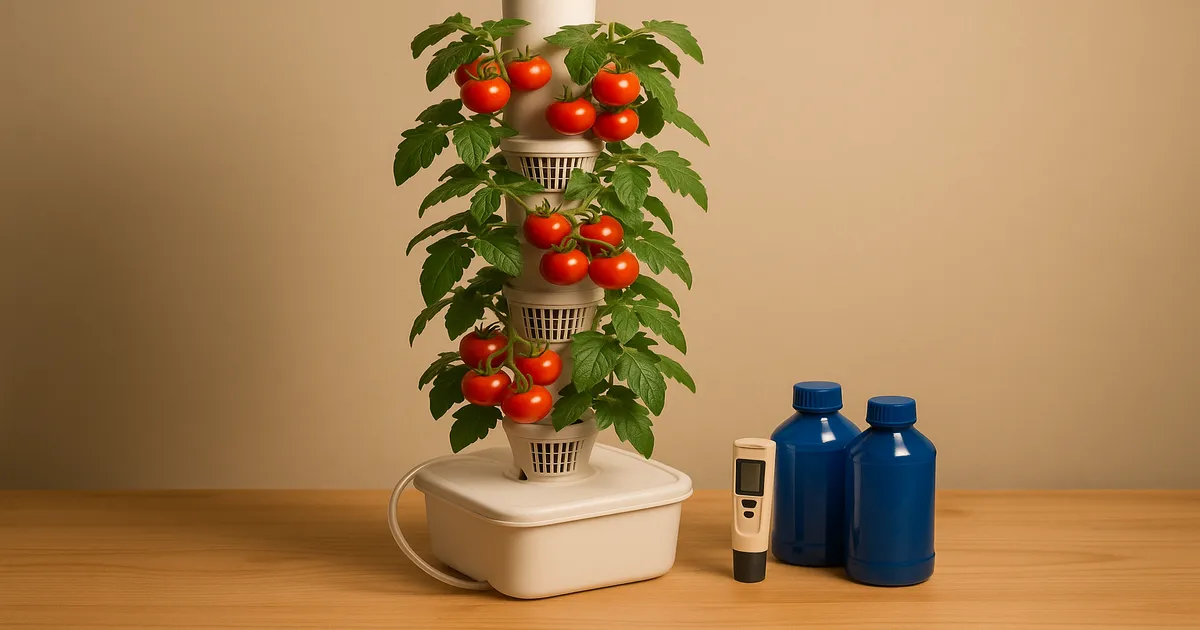
- 24V LED rings: ZipGrow towers, aeroponic towers, tiered NFT channels, micro-commercial vertical farms, any build where electrical safety near water is non-negotiable
Lighting Performance: PPFD, Spectrum, and Coverage
T8 Bar Output and Spectrum
A quality horticultural LED T8 bar delivers 150–350 µmol/m²/s PPFD at 6 inches, dropping to 60–180 µmol/m²/s at 12 inches. That’s sufficient for leafy greens (target: 150–300 µmol/m²/s) at close range, but falls short for fruiting crops (400–800 µmol/m²/s) unless you stack multiple bars. Beam angle is wide — 120–180° — which suits side-lighting well.
The spectrum limitation is the phosphor coating. Standard cool-white T8s skew heavily blue-green. Horticultural versions offer a better red ratio, but still can’t match wavelength-specific LEDs.
24V LED Ring Output and Spectral Customization
Well-built 24V rings using high-density SMD chips can match or exceed T8 bar PPFD at equivalent distances — and they do it with a spectrum you actually designed. A proven starting point for leafy greens and herbs is 15–20% blue (450nm), 30–40% green, 40–50% red (660nm), and 5–10% far-red (730nm). That far-red component unlocks the Emerson Enhancement Effect, where red and far-red combined boost photosynthetic efficiency by 20–30%. No standard T8 phosphor coating can replicate that.
Shadowing and Canopy Penetration
T8 bars mounted vertically create excellent lateral penetration through dense foliage. Their elongated form factor covers tall canopy columns effectively. Rings excel at delivering even, radial coverage around individual plant sites. In a tower system with plants growing outward in all directions, rings often win. In a flat-panel NFT rack with rows of plants, T8 bars may cover more area per fixture. Neither is universally superior — it depends on your canopy geometry.
Both systems address the same core challenge: intensity drops with the square of the distance, so mounting lights at each tier rather than relying on a single overhead source is essential regardless of which technology you choose.
Safety, Heat, and Electrical Considerations
120V AC T8 Bars Near Water
Running 120V AC fixtures in a mist-heavy, splash-prone environment is a real hazard. It’s manageable, but it requires discipline. Every T8 installation near a hydroponic system needs GFCI-protected outlets, fixtures rated at minimum IP44 (splash-resistant), and careful cable routing away from drip zones. Fluorescent T8 ballasts are particularly vulnerable to moisture ingress.
Why 24V DC Changes the Risk Profile
At 24V DC, the current passing through the human body in a fault condition is well below dangerous thresholds — especially compared to 120V AC. You still want IP65-rated strips and waterproof connectors in direct splash zones, and your power supply should be housed away from moisture. But the fundamental risk profile is categorically lower. For any grow where water and lights share close proximity, this distinction matters.
Heat and Root Zone Temperature
Fluorescent T8s generate meaningful radiant heat — enough to push reservoir temperatures above 72°F (22°C) in enclosed tower systems. Warmer water holds less dissolved oxygen, accelerates microbial growth, and destabilizes pH. LED T8s run cooler, but still produce more localized heat than 24V rings. Target 65–68°F (18–20°C) for your reservoir. If T8 bars are pushing temps beyond that, consider reservoir insulation, increased aeration, or an Active Aqua Water Chiller before switching systems entirely.
24V LED rings, distributing lower wattage across multiple small fixtures, produce less concentrated heat and are far less likely to create a root zone temperature problem.
Nutrients and pH Under Each Lighting System
Light Intensity and Nutrient Uptake
Higher PPFD from either system means faster photosynthesis and faster nutrient consumption. Under well-dialed lighting, EC will drop more quickly between reservoir checks. Monitor EC daily in active systems and top off with plain pH-adjusted water (pH 5.8–6.0) when the reservoir drops 10–20%, rather than adding full-strength nutrient solution every time.
T8 Heat, Calcium, and Tip Burn
When T8 heat pushes reservoir temps up, transpiration increases and calcium demand rises. Lettuce tip burn — often blamed on airflow — frequently has a heat-plus-calcium component. If you’re running T8 bars in an enclosed system and seeing tip burn, raise calcium to 150–200 PPM and verify reservoir temperature before adjusting anything else.
Far-Red Rings and Shade Avoidance
Far-red supplementation (730nm) is powerful, but it can trigger shade avoidance — stem elongation and stretched internodes, as if plants are competing for light. If your 24V rings are heavy on far-red and you’re seeing leggy growth, reduce the far-red ratio below 5% or shorten the photoperiod by 1–2 hours. When running far-red intentionally, bump calcium to 150–200 PPM and add silica at 50–100 PPM (potassium silicate) to support cell wall integrity.
Nutrient Recipes for Vertical Hydroponic Grows
Target ranges by crop:
- Leafy greens: 600–1,000 PPM (1.2–2.0 EC), pH 5.8–6.2, N:P:K ≈ 3:1:2
- Herbs: 700–1,100 PPM (1.4–2.2 EC), pH 5.8–6.3
Three reliable base recipes:
- GH Flora Series 3-Part — Vegetative: FloraGro 10 mL/gal + FloraMicro 5 mL/gal + FloraBloom 5 mL/gal → ~900–1,100 PPM (1.8–2.2 EC)
- Masterblend 4-18-38 — 2.4 g/gal Masterblend + 2.4 g/gal calcium nitrate + 1.2 g/gal Epsom salt → ~800–1,000 PPM (1.6–2.0 EC); excellent for leafy greens and herbs
- Modified Hoagland’s Solution — Potassium nitrate + calcium nitrate + monopotassium phosphate + magnesium sulfate + micronutrient premix; well-documented and easy to adjust
Scalability, Cost, and Installation
T8 LED bars cost $10–30 per bar, require no special equipment, and install in minutes. 24V LED rings require a Mean Well power supply, custom PCBs or quality LED strip, connectors, and either fabrication time or a premium for pre-built units — expect $30–80+ per tier minimum.
That said, 24V rings typically draw less power per equivalent light output. Lighting represents 25–35% of operational costs in indoor vertical farms, so energy savings compound meaningfully over time.
Scaling is where the gap widens most. Adding a tier to a 24V ring system means connecting another ring to the existing daisy chain — assuming your power supply has headroom. Adding a tier to a T8 system means finding another outlet, another fixture, and possibly another timer. Beyond 4–5 tiers, the T8 approach becomes genuinely cumbersome. The 24V topology was designed for exactly this kind of modular expansion.
T8 bars are as plug-and-play as lighting gets. 24V LED rings require basic DC wiring knowledge and some understanding of power supply load calculations. Neither is beyond a motivated beginner, but the T8 path has essentially zero learning curve.
Which System Is Right for Your Grow?
Choose T8 Bars If:
- You’re a hobbyist or first-time vertical grower
- Your setup is a grow tent with 2–4 wire rack shelves
- You’re growing lettuce, spinach, or herbs with no plans to scale
- Budget is tight and simplicity matters more than optimization
- You already have GFCI outlets and can manage moisture carefully
Choose Custom 24V LED Rings If:
- You’re running a ZipGrow tower, aeroponic tower, or multi-tier NFT system
- Water and electricity are in close proximity and safety is non-negotiable
- You want spectrum control — far-red, UV supplementation, or tunable ratios
- You’re planning to expand beyond 5 tiers and need clean scalability
- You’re operating a micro-commercial setup where efficiency and consistency matter
Hybrid Approach
Some of the most effective vertical grow builds combine both systems. T8 bars handle primary side-lighting across the bulk of the canopy, while 24V rings at each tier provide targeted far-red or UV supplementation. It keeps main lighting costs low while adding spectral precision where it counts most — a smart transition strategy for growers experimenting with spectrum enhancement before committing to a full ring conversion.
Troubleshooting Common Lighting Problems
Uneven Growth Across Tiers
If top tiers thrive while lower tiers lag, PPFD drop-off is the likely culprit. Map your system with a quantum PAR meter, such as the Apogee MQ-500, at each tier level. You’re looking for consistency within 20–30% across tiers. Adjust fixture height, add reflective material to walls, or add a dedicated fixture at problem tiers.
Tip Burn Linked to T8 Heat
Tip burn in lettuce is often a calcium mobility issue made worse by heat and high airflow — both common in T8-lit enclosed towers. Raise calcium to 150–200 PPM, improve airflow circulation (direction matters as much as volume), and check reservoir temperature. If temps are above 70°F (21°C), that’s your root cause.
Leggy Stems Under Far-Red LED Rings
Excessive far-red is the usual suspect when plants stretch abnormally under 24V ring systems. Reduce far-red output below 5% of total spectrum, or trim 1–2 hours from your photoperiod. Increasing blue light to 18–20% also helps suppress elongation by promoting compact vegetative growth.
pH Instability from Reservoir Overheating
A reservoir running above 72°F (22°C) becomes a microbial playground. Bacterial blooms consume oxygen, produce acids, and send pH crashing unpredictably. Fix temperature first: insulate the reservoir, increase aeration, and add a chiller if needed. Monitor pH daily with a calibrated meter, such as the Bluelab pH Pen.
| Symptom | Likely Cause | Fix |
|---|---|---|
| pH rising overnight | Anion uptake (NO₃⁻), CO₂ depletion | Increase aeration; add pH Down |
| pH dropping rapidly | Microbial activity, organic matter | Clean reservoir; check for root rot |
| pH crashing below 5.5 | Bacterial bloom | Partial reservoir change; add pH Up slowly |
| EC rising without dosing | Evaporation exceeding uptake | Top off with plain pH-adjusted water |
| EC dropping rapidly | Vigorous plant uptake under good light | Add diluted nutrient solution |
Frequently Asked Questions
Are external vertical T8 bars or 24V LED rings better for a beginner?
T8 bars. They’re cheaper, require no wiring knowledge, and are available at any hydroponic or hardware store. Mount them vertically alongside your channels, plug them into a GFCI outlet, and you’re growing. Once you understand your system’s light requirements, upgrading to 24V rings for spectrum control and scalability is a natural next step.
How many T8 bars do I need per tier in a vertical hydroponic rack?
For leafy greens targeting 150–300 µmol/m²/s, one 4-foot LED T8 bar mounted 6–8 inches from the canopy typically covers a single shelf tier 12–18 inches deep. Wider or deeper shelves may need two bars per tier. Confirm coverage with a quantum PAR meter at canopy level — guessing wastes both light and electricity.
Are 24V LED rings safe to use in hydroponic systems near water?
Yes. 24V DC is classified as Safety Extra-Low Voltage (SELV), meaning the shock risk in a fault condition is far lower than 120V AC. Use IP65-rated strips and waterproof connectors in direct splash zones, and house your power supply away from moisture. It’s still electricity, so sensible precautions apply — but 24V is genuinely the safer choice for wet hydroponic environments.
Can I mix T8 bars and 24V LED rings in the same vertical grow system?
Yes, and it’s often the most cost-effective approach. Use T8 bars as your primary side-lighting source and add 24V rings at each tier for far-red or UV supplementation. This lets you keep main lighting costs low while gaining spectral control where it has the most impact on yield and plant morphology.
What power supply do I need for a 24V LED ring system?
A Mean Well LRS-350-24 (350W, 24V) is a reliable starting point for most DIY tiered systems. Calculate your total wattage across all rings, then size your power supply to no more than 80% of its rated capacity to avoid thermal stress. For example, a 350W supply should run no more than 280W of LED load continuously.